
Hair loss
Female Hair Loss
Female hair loss looks different, behaves differently, and — critically — is far more often driven by something treatable. Operating before that has been ruled out wastes grafts and does not stop the shedding.
- Affects
- ~40% of women by age 50
- Pattern
- Diffuse thinning, widening part
- First step
- Bloodwork + trichoscopy
- Surgical candidacy
- A minority of cases
It rarely looks like male pattern loss
Women usually keep their frontal hairline and thin diffusely across the top, with the part line widening over years. The Ludwig scale describes this in three stages. Temporal recession and a receding hairline do occur, but they are the exception rather than the rule.
Because the loss is spread out rather than concentrated, it can be advanced before it becomes obvious in a mirror — and it often becomes obvious in a photograph first.
The list of causes is long, and most are not genetic
Before anyone discusses surgery, these need to be excluded:
- Iron deficiency — low ferritin causes shedding well before anemia shows
- Thyroid dysfunction, in either direction
- Telogen effluvium after childbirth, illness, surgery, or acute stress
- Polycystic ovary syndrome and other causes of hyperandrogenism
- Rapid weight loss, restrictive dieting, and bariatric surgery
- Traction from tight braids, weaves, extensions and habitual tight styling
- Medication side effects — including some contraceptives, antidepressants and retinoids
What a proper assessment looks like
Trichoscopy to look at the follicles under magnification and measure miniaturization. Bloodwork covering ferritin, full blood count, thyroid function and, where indicated, androgens. A history that covers the last two years, because telogen effluvium lags its trigger by three to six months.
Any clinic that books a woman for surgery without this has skipped the part that actually determines the outcome.
Where surgery genuinely helps
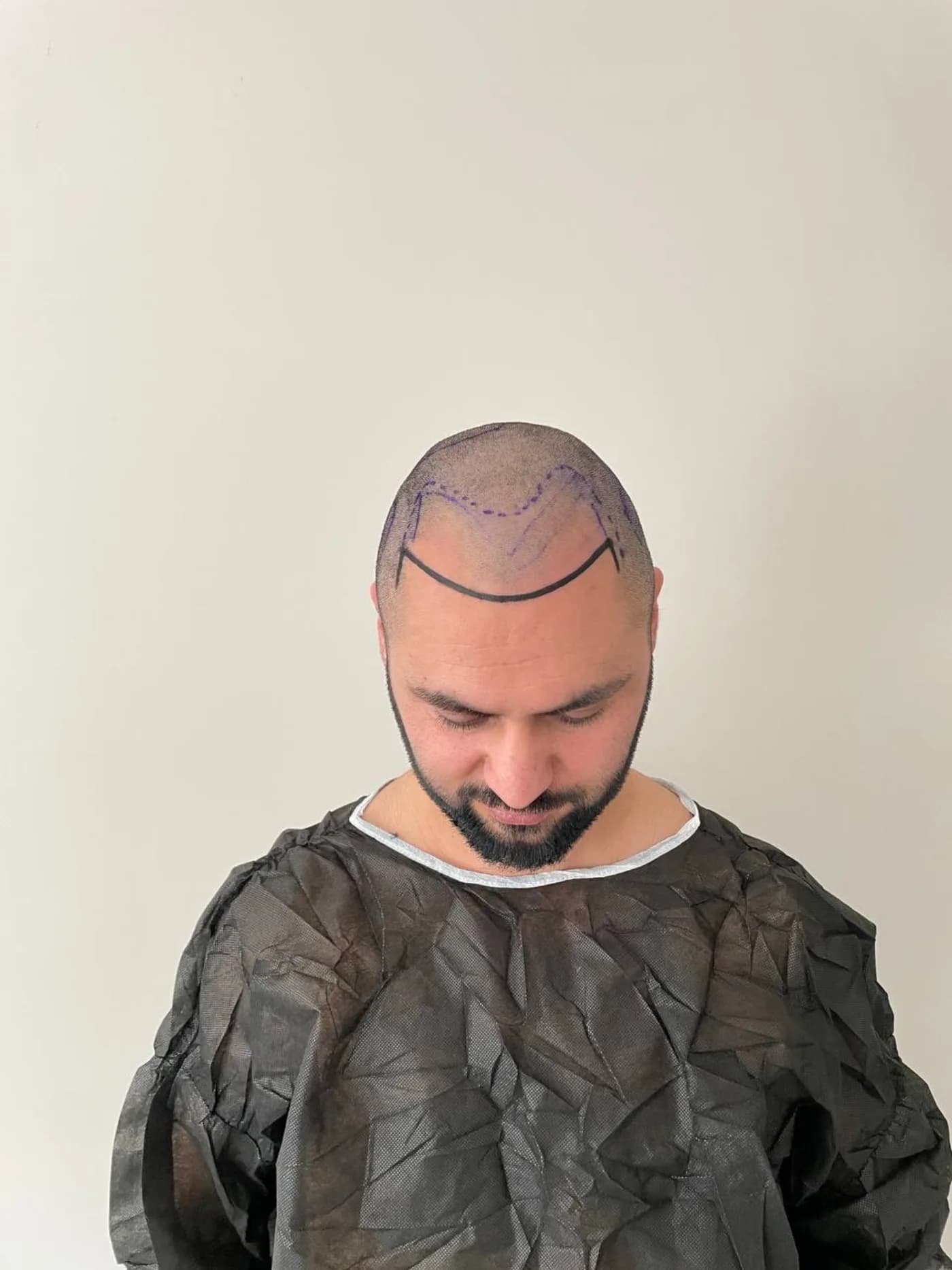
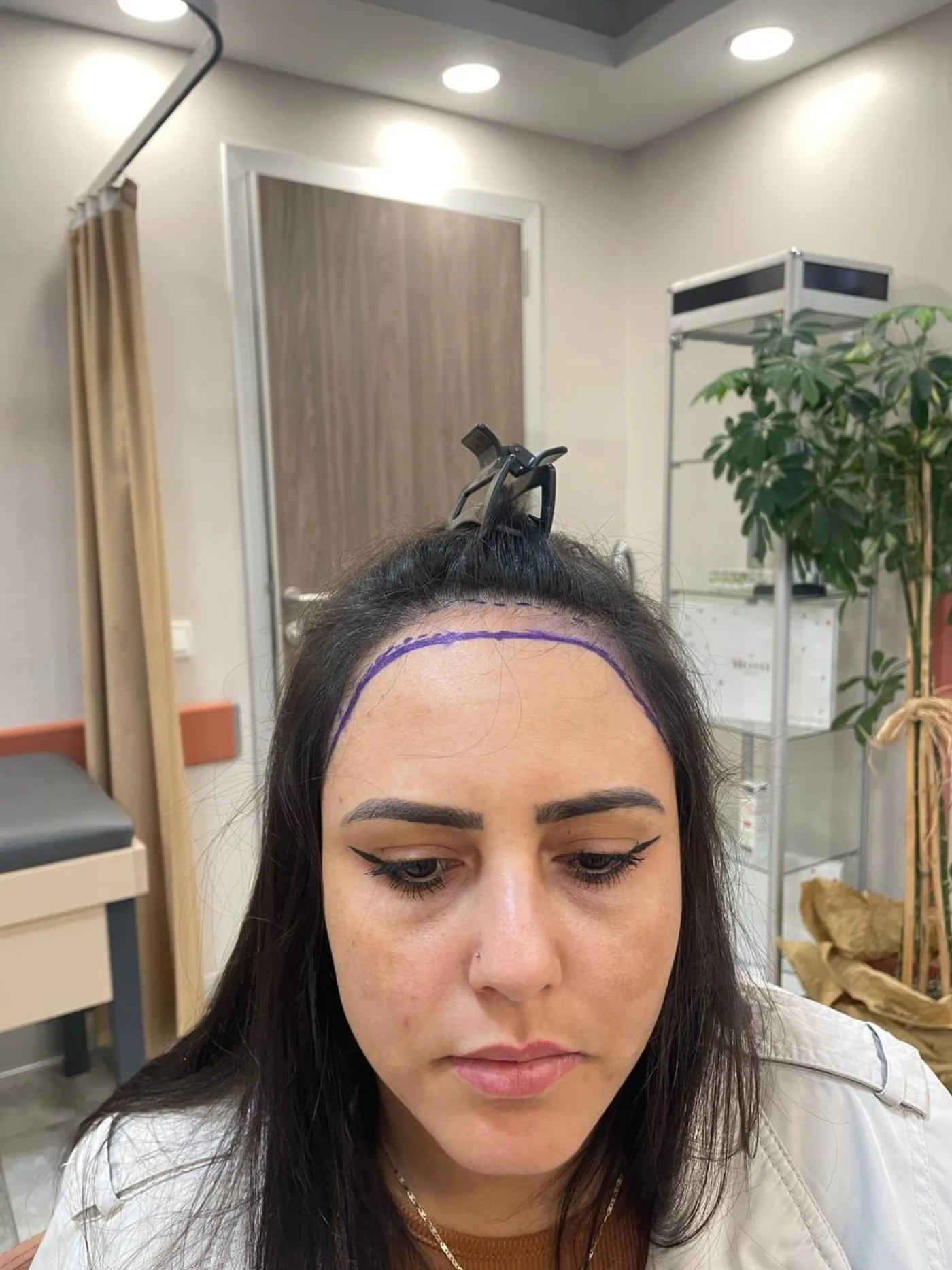
Lowering a naturally high hairline. Filling temporal recession, including traction loss once the tension is removed. Adding density to a widening part where the donor area is stable. Camouflaging scars from a facelift or previous surgery.
In most of these cases the procedure can be done without shaving: the donor strip is trimmed under a curtain of longer hair, and the recipient area is worked between existing hairs.
The tests worth asking for
Because female hair loss so often has a treatable driver, the first appointment should generate data rather than a quote. A reasonable workup includes ferritin — not just hemoglobin, since iron stores can be depleted long before anemia appears — full thyroid function, vitamin D, and where the history suggests it, androgen levels and a review of any hormonal contraception or recent pregnancy.
Trichoscopy adds what bloodwork cannot: whether hair caliber varies across the scalp. Uniform thinning everywhere points toward telogen effluvium or a systemic cause; variation concentrated on the top with a preserved back and sides points toward a pattern process.
Styling, traction, and the loss that is preventable
Traction alopecia is the one form of hair loss that is genuinely preventable and frequently missed. Years of tight braids, weaves, extensions, high ponytails or bonded pieces place sustained tension on follicles at the hairline and temples. Early on it is reversible if the tension stops. Left long enough it becomes scarring, and a scarred follicle cannot be recovered by any treatment.
The clinical signal is loss concentrated exactly where tension is applied — the frontal hairline and the temples — with a normal crown and back. Where scarring has already occurred, transplantation into the scarred zone is possible in selected cases but has lower survival than transplantation into healthy skin, and requires the tension to have stopped permanently first.
Where women fit in a surgical practice
A minority of women who inquire about hair transplantation are surgical candidates, and that proportion is not a comment on the severity of their loss. It reflects two things: how often a treatable cause is found in the workup, and how often diffuse thinning extends into the donor area itself. A donor region that is also thinning cannot safely fund a recipient area, however dense it looks at a glance.
Where a woman is a candidate, the operation is planned around her rather than around a male template. It is usually unshaven, usually uses implanters, and usually targets a widened part, a thinning crown, or temples and a hairline lost to years of tension rather than a receded frontal line. Hairline lowering, where the goal is a rounder and lower female hairline rather than replacing lost hair, is its own distinct procedure with its own planning.
Find out what is really possible with your donor area.
A free assessment, an honest graft count and a clear answer on whether surgery is the right move right now.