
Surgical Hair Transplant
Women's Hair Transplant
Female-pattern hair loss usually thins the whole top of the head rather than receding in an M shape. That changes everything — diagnosis first, then donor strategy, and the surgical plan last.
Diffuse thinning needs a different plan from male-pattern recession.
- Duration
- 5–8 hours
- Anesthesia
- Local
- Graft range
- 1,000 – 3,000
- Back to work
- 7–14 days
- First growth
- Month 3–5
- Final result
- Month 12–18
What it actually is
With a female patient, surgery is not the first step. Diffuse thinning in women can be androgenetic, but it can just as easily be a thyroid disorder, iron deficiency, postpartum telogen effluvium, PCOS or traction from years of tight hairstyles. Operating on a patient whose hair loss is medical rather than genetic wastes grafts and doesn't stop the shedding.
So the path starts with blood tests and a trichoscopic assessment. If the cause is medical, we treat the cause. If the loss is genetic and the donor area is stable, a transplant is on the table.
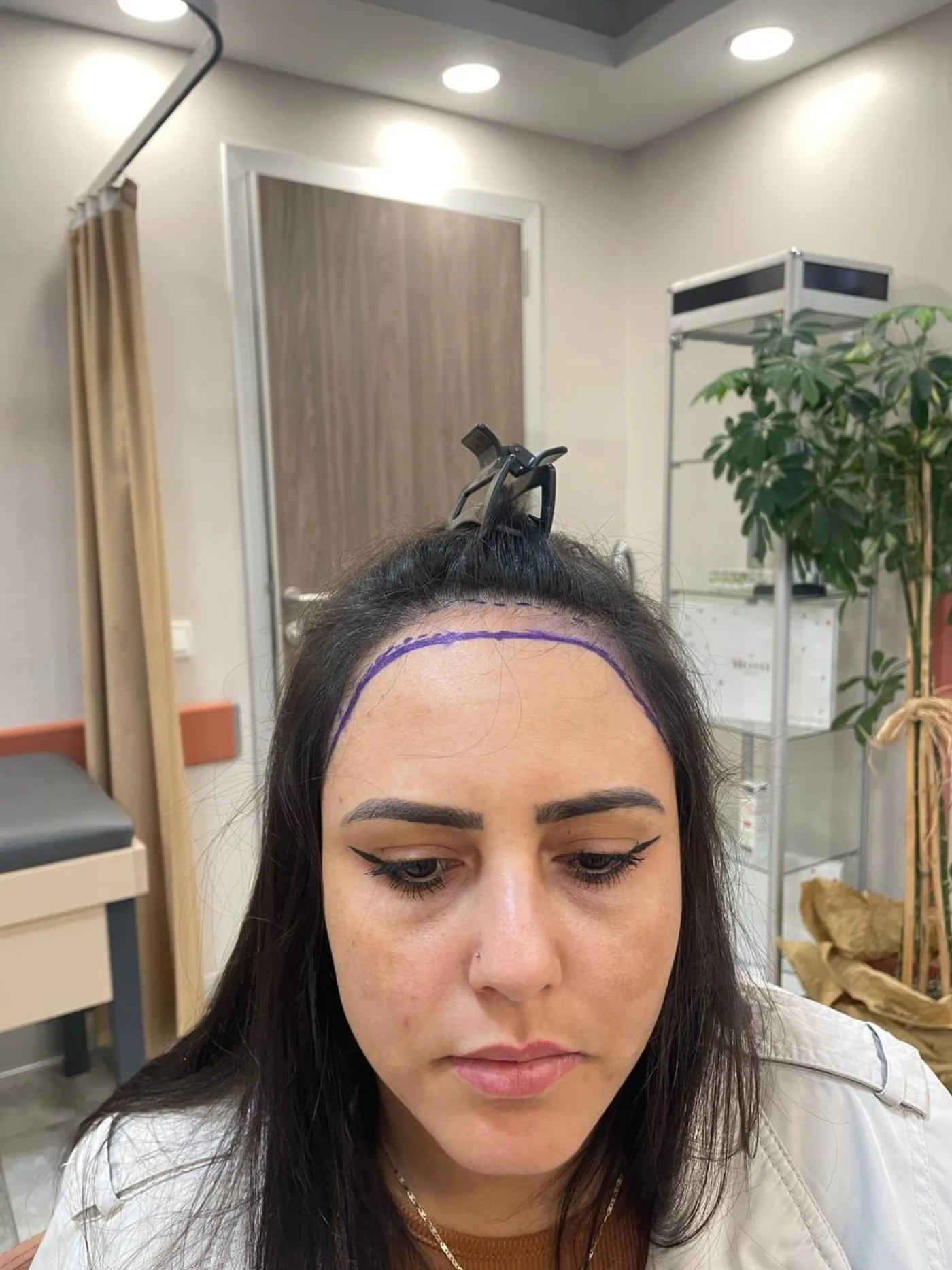
Surgically, the most common cases are lowering a high hairline, filling temple recession and adding density to a widening part. Most of these can be done unshaven — a strip of donor hair underneath is trimmed and the hair above covers it completely.
Who it suits
- A naturally high or surgically raised hairline you'd like lowered
- Temple thinning, including traction loss from tight hairstyles
- A widening center part with a stable donor area
- Facelift or previous surgical scars
When we say no
- Untreated thyroid, iron or hormonal causes — these come first
- Active telogen effluvium that hasn't stabilized yet
- Diffuse, unpatterned alopecia where the donor area is thinning too
These are general indications, not a diagnosis. Whether this procedure is right for you is decided by an examination, not by a website.
Step by step
What happens,
in order.
- 01
Diagnosis first
Trichoscopy and blood tests to separate genetic hair loss from medical causes.
- 02
Design
The hairline and part line are planned around your face shape and how you actually wear your hair.
- 03
Hidden donor extraction
A donor strip is trimmed beneath the curtain of long hair; invisible once combed.
- 04
Implantation
DHI between existing hairs, angled to your natural part direction.
- 05
Medical support
Topical or oral treatment where needed to protect the surrounding native hair.
- 06
Follow-up
Photo check-ups at months 1, 3, 6 and 12.
The workup isn't a formality
Female hair loss has a long list of non-androgenetic causes, and most of them can be treated without surgery: thyroid disease, iron deficiency, postpartum telogen effluvium, polycystic ovary syndrome, medications and traction from years of tight hairstyles. Operating on diffuse loss caused by an untreated systemic condition wastes grafts and doesn't stop the shedding.
That's why a surgical consultation with a woman starts with blood tests and trichoscopy, not a graft count. It's also why a meaningful share of women who come to us are advised not to have surgery this year — not because the procedure would fail technically, but because it would treat a symptom while the cause carries on.
If surgery is right, it's planned differently
When a woman is a true candidate — stable diagnosis, defined area, sufficient donor density — the procedure itself differs from the male version in almost every practical respect. It's usually unshaven. It usually uses an implanter. The target is often not a receding hairline but a widened part, a thinning crown or temples lost to traction.
Hairline lowering and temple point restoration are a discipline of their own, because a female hairline is rounder, lower and softer than a male one, and a design borrowed from a male template reads as wrong long before anyone can say why.
Not sure where you stand?
A free assessment gives you a measured graft range and a clear answer on whether surgery is the right move this year.
Get a free assessmentQuestions
Straight answers.
In most female cases, no. The donor area is trimmed in a narrow band that long hair covers completely, and the recipient area is usually worked unshaven.
Because a significant share of hair loss in women isn't genetic. If your ferritin is 12 or your thyroid is off, a transplant won't stop your shedding. A clinic that operates without checking isn't treating you — it's selling to you.
Traction alopecia responds well to a transplant once the tension has been removed and the follicles have been given time to show whether they're dormant or gone. That usually means waiting a few months before surgery.
Is Women's Hair Transplant the right procedure for you?
Send four answers and let the clinical team tell you — even if the answer is no.