
Surgical Hair Transplant
Hair Transplant Revision
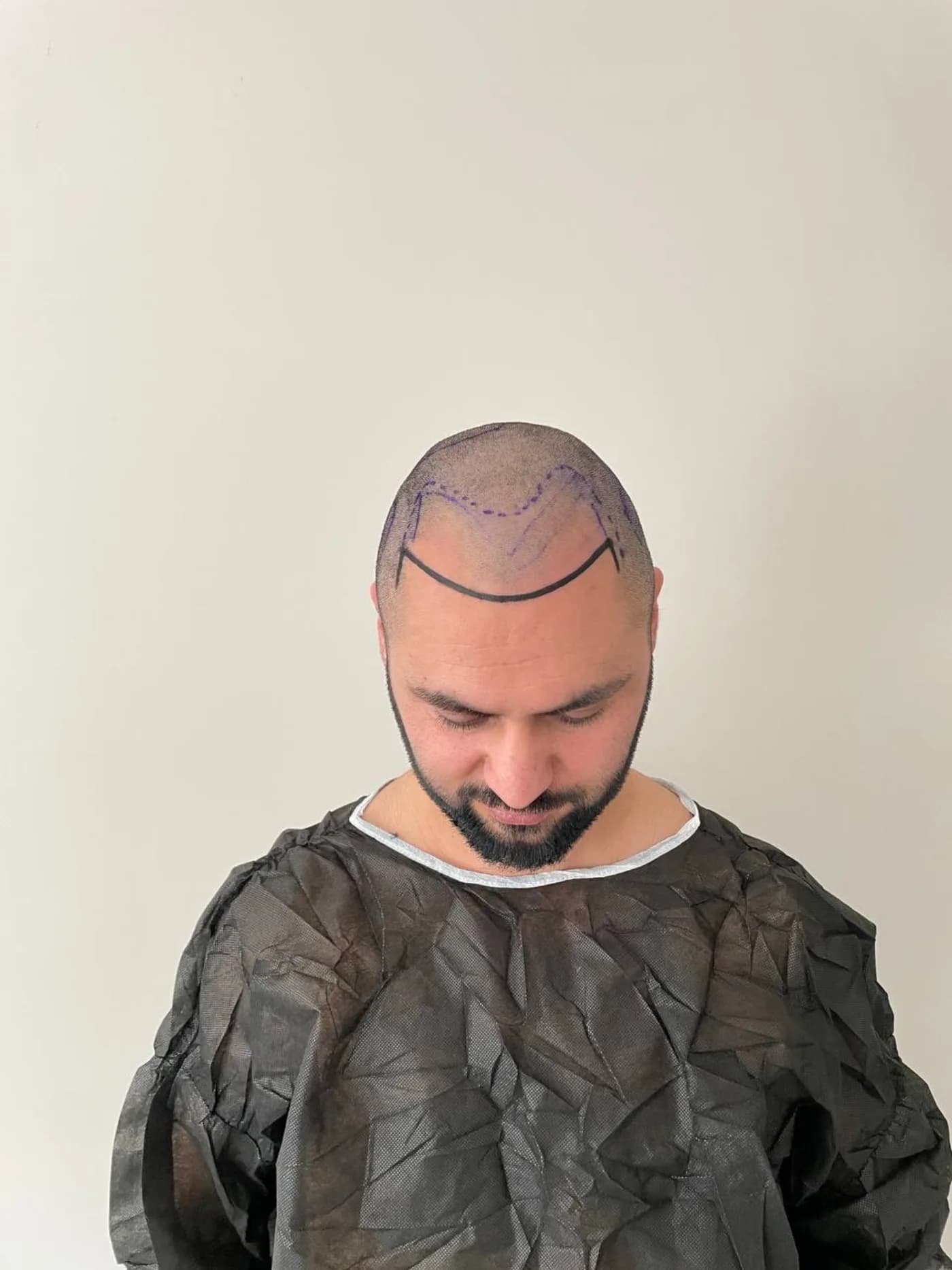
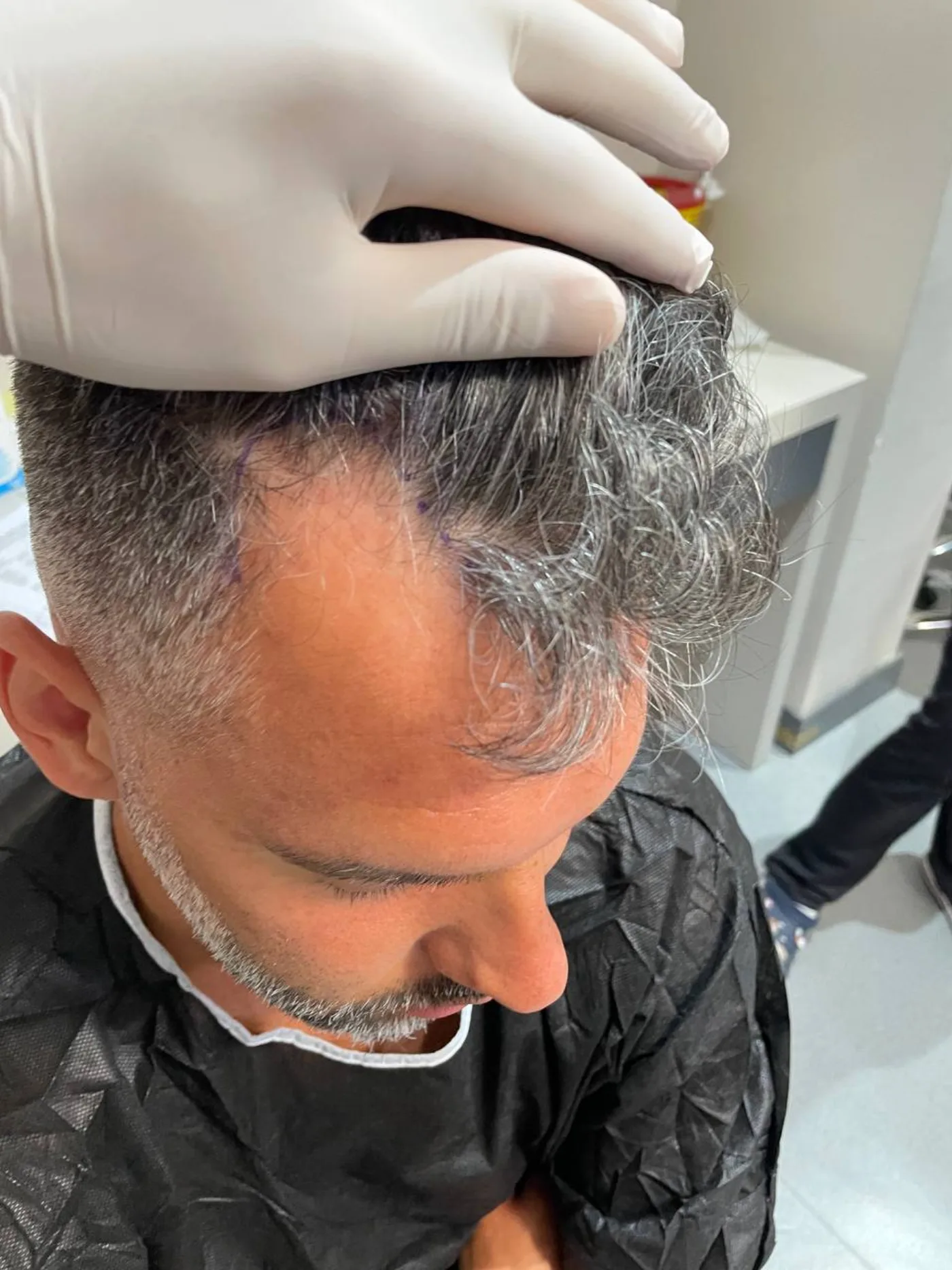
Pluggy grafts, a hairline drawn too low or too straight, visible scars, depleted donor areas. Revision is the hardest work in this field, because you're solving a problem with whatever resources the first surgeon left behind.
Fixing what someone else got wrong.
- Duration
- 6–9 hours, often staged
- Anesthesia
- Local
- Graft range
- Highly variable
- Sessions
- Often more than one
- Back to work
- 10–14 days
- Final result
- 12–18 months per stage
What it actually is
Revision patients arrive with some combination of four problems: grafts placed in visible clusters instead of natural units, a hairline drawn too low or too straight for the face, a donor area harvested so aggressively that it now shows, and scars from a strip procedure or oversized FUE punches.
Each is corrected differently. Clustered grafts are removed and redistributed — the follicles aren't wasted, they're recycled. A poor hairline is softened with single hairs and, if necessary, partly removed and rebuilt. Donor depletion sometimes means harvesting from the beard or body. Strip scars can be camouflaged with grafts placed directly into the scar tissue, but survival there is lower and expectations need to reflect that.
The constraint that governs everything is what's left. A first surgeon who spent five thousand grafts badly has spent them permanently. Revision is planned around that arithmetic, usually over more than one session — and we'd rather show you a modest but achievable plan than an optimistic one you'll regret later.
Who it suits
- Visible plugs or clustered grafts from an earlier procedure
- A hairline placed too low, too straight or too far forward
- A linear strip scar or over-punched FUE donor scarring
- Poor growth from a previous session with donor reserve remaining
When we say no
- An already depleted donor area — no surgery creates new follicles
- Results of a procedure less than twelve months old that haven't finished growing
- Expecting a single-session fix for extensive previous damage
- Active scarring alopecia underlying the original poor result
These are general indications, not a diagnosis. Whether this procedure is right for you is decided by an examination, not by a website.
Step by step
What happens,
in order.
- 01
Honest audit
What was done, what remains in the donor area and what can realistically be achieved with it.
- 02
Staged plan
Revision is usually split into sessions. You see the whole sequence before the first one.
- 03
Removal and recycling
Clustered or badly angled grafts are removed and their follicles re-implanted individually.
- 04
Hairline softening
Single-hair units build an irregular, age-appropriate front line.
- 05
Scar camouflage
Grafts are placed into scar tissue; the expected survival rate is stated clearly in advance.
- 06
Review
Twelve to eighteen months per stage before the next one is planned.
What revision actually works with
A revision case inherits someone else's decisions. The three most common: a hairline placed too low or too straight for the face, clumpy multi-hair grafts sitting where single hairs should be, and a donor area over-harvested to hit a package number. Each is corrected differently, and the correction often competes with the others for the remaining grafts.
Clumped grafts can be removed and re-implanted individually; that recycles the hair but takes time and risks losing some of it. A low hairline can sometimes be softened rather than moved. An over-harvested donor area, however, can never be restored — only camouflaged with body or beard hair, or with scalp micropigmentation.
Expectations, honestly
Revision almost always costs more than the original surgery and delivers less, because it starts from a smaller donor supply and a compromised recipient bed. It often requires two or three staged sessions spread over two years, and the goal is usually 'unremarkable', not 'perfect'.
That's a hard conversation, and it belongs at the start. A patient who understands they're buying normality rather than transformation tends to be satisfied with revision; a patient sold a second shot at the original promise does not.
Not sure where you stand?
A free assessment gives you a measured graft range and a clear answer on whether surgery is the right move this year.
Get a free assessmentQuestions
Straight answers.
Improved, almost always. Fully undone, not always. The honest limit is donor supply — if the first surgeon spent it, no technique creates more. We'd rather tell you that at the consultation than after a deposit.
Grafts can be removed, and the follicles are usually re-implanted somewhere more useful rather than discarded. Complete removal without replacement leaves scarring of its own, so on its own it's rarely the right answer.
Some do. Scar tissue has poorer blood supply; survival is lower than in healthy scalp and two passes are often needed. Anyone promising normal density in a scar is exaggerating.
Is Transplant Revision the right procedure for you?
Send four answers and let the clinical team tell you — even if the answer is no.