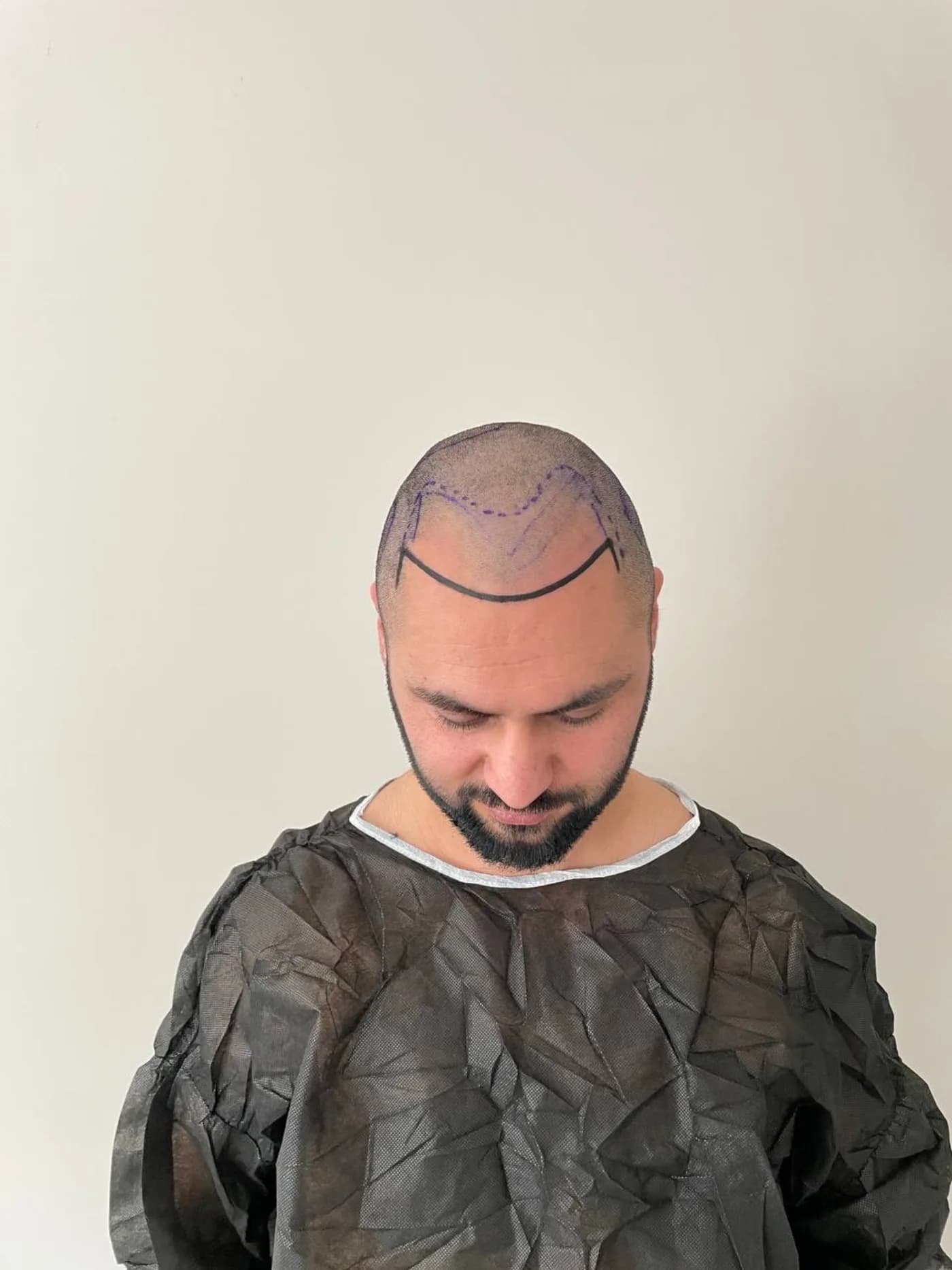
The surgeon does the surgery
In much of this industry, the surgeon designs the hairline and technicians do the rest. Here the surgeon performs the extraction, channel opening and implantation. It is the single biggest variable in your result.

Istanbul, Türkiye · accepting new patients
Sapphire FUE and DHI hair transplants in Istanbul. Your hairline is designed around your facial features and every graft is placed at its own angle and direction — the result looks like your own hair, not transplanted hair.
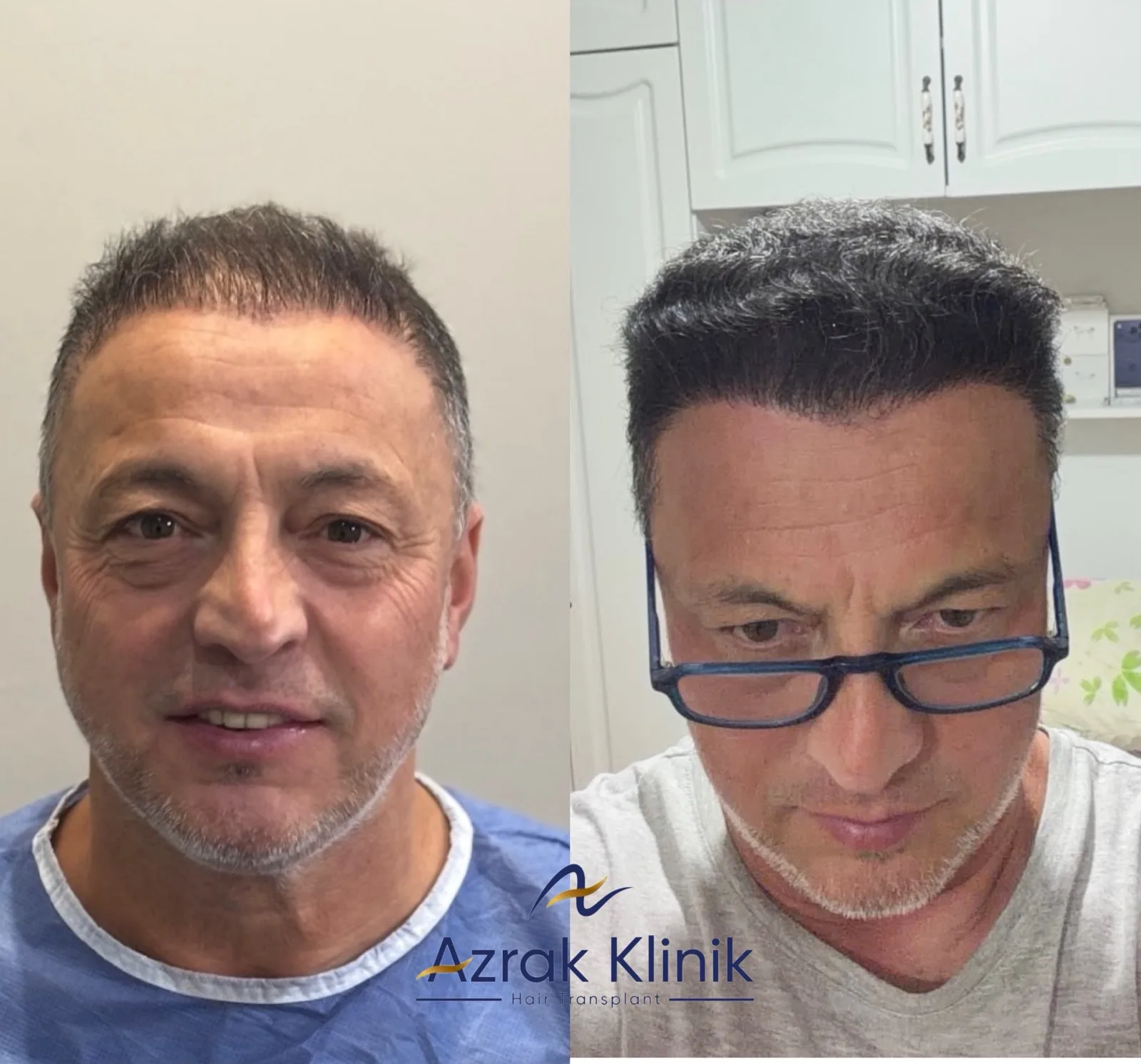
Frontal hairline and front zone — the clinic’s own patient. Results vary from person to person.
Results published on @azrak_hairA sterile treatment environment, single-use consumables and every step documented.
Decisions based on an examination, not a photo — starting with trichoscopy and donor measurement.
11 procedures under one roof; graft count and technique are planned around your donor area.
Photo-documented check-ups at months 1, 3, 6 and 12, with direct access to the clinical team in between.
Everything under one roof
Surgical restoration, facial work and the non-surgical treatments that protect the hair you have. Nothing is outsourced to a partner clinic.
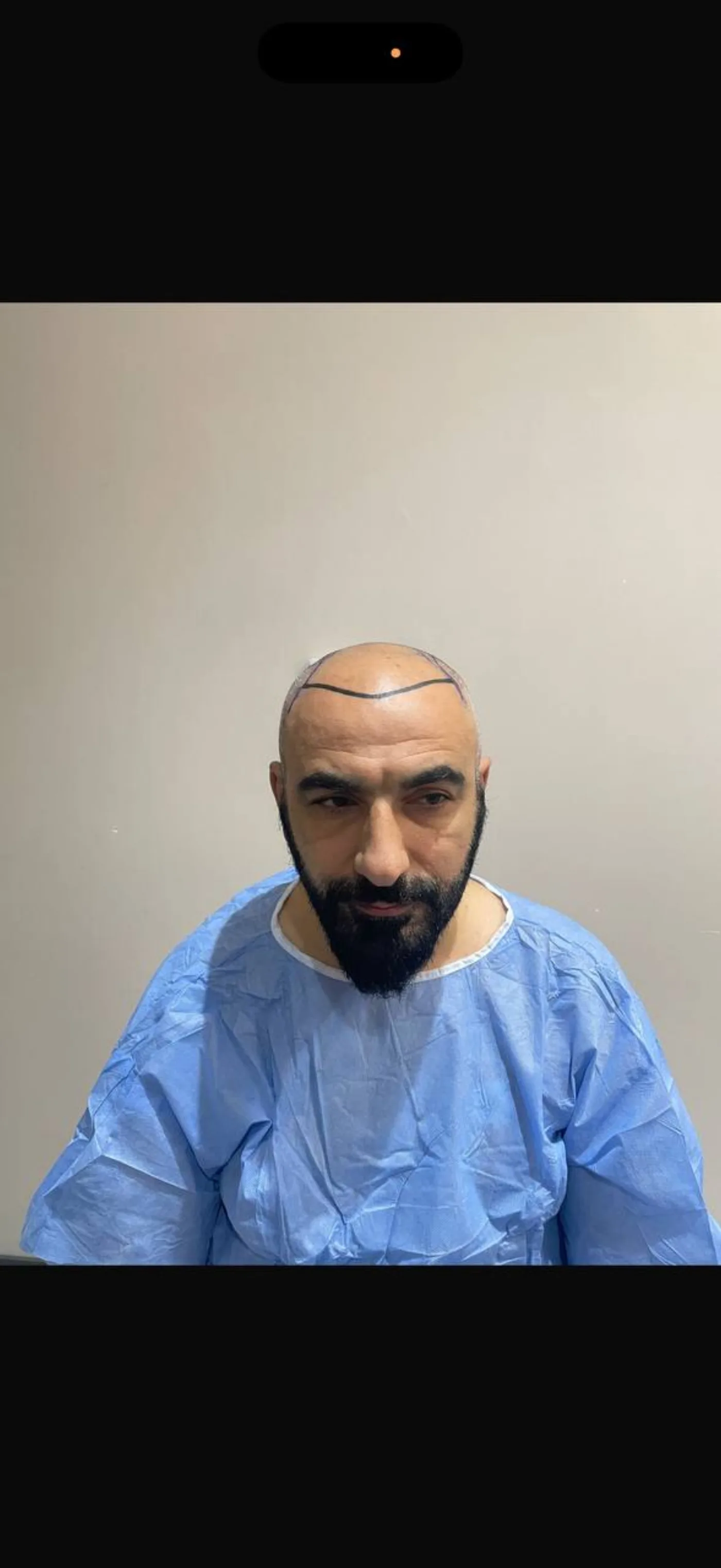
Surgeon-led
Follicular unit extraction performed by the operating surgeon — with sapphire-tipped blades or Choi implanter pens.
Procedures in this department
Surgeon-led from start to finish
Extraction and implantation by the surgeon — never handed off to a technician
Real patients, unretouched
Every photo below is the clinic’s own patient; before and after show the same person. No filters, no styling tricks, no borrowed cases. Results vary from person to person.
The process, in twelve chapters
Design, anesthesia, extraction, placement, shedding, regrowth. The anxiety around this operation is almost entirely made of unanswered questions.
“What if it doesn't suit my face?”
Your hairline is designed on you — standing, upright, in natural light — and you approve it in a mirror before consent is signed. It follows your facial proportions and your age, not a template. A line that looks right at 35 has to still look right at 55.
Read this chapter“What does DHI actually mean?”
A Choi implanter pen holds the follicle inside a hollow needle. The needle enters the scalp and a plunger releases the graft at depth — one motion instead of two. Less time out of the body, and the surgeon sets the angle for every single graft.
Read this chapter“Is it going to look fake?”
Hair does not grow straight out of the scalp. It exits at an angle and in a direction that changes across the head — forward at the front, swirling at the crown. Each graft is placed to match. Get this wrong and it reads as artificial from across a room, no matter how many grafts went in.
Read this chapter“Did I just waste my money?”
Between weeks two and six, most transplanted hairs shed. The follicle stays — only the shaft is lost, while the follicle enters a resting phase. It is the single most alarming stage of the process and the most predictable. Nothing has gone wrong.
Read this chapter“When will I actually see something?”
New growth typically starts around month three to four, fine and sparse. By month six there is visible coverage. Between months nine and twelve the hair thickens and matures. Final judgment belongs at month twelve to eighteen, not before.
Read this chapter“Why Azrak Hair?”
One patient per surgeon per day. The surgeon who designs your hairline is the surgeon who extracts and implants. A twelve-month aftercare program with photographic review at each stage. No graft-count upselling, and no promises we cannot photograph.
Read this chapterWhy Azrak Hair
Most of what separates an excellent hair transplant from a mediocre one never shows up in a brochure. It lies in who holds the punch, how many patients share the day, and whether someone is willing to turn you away.
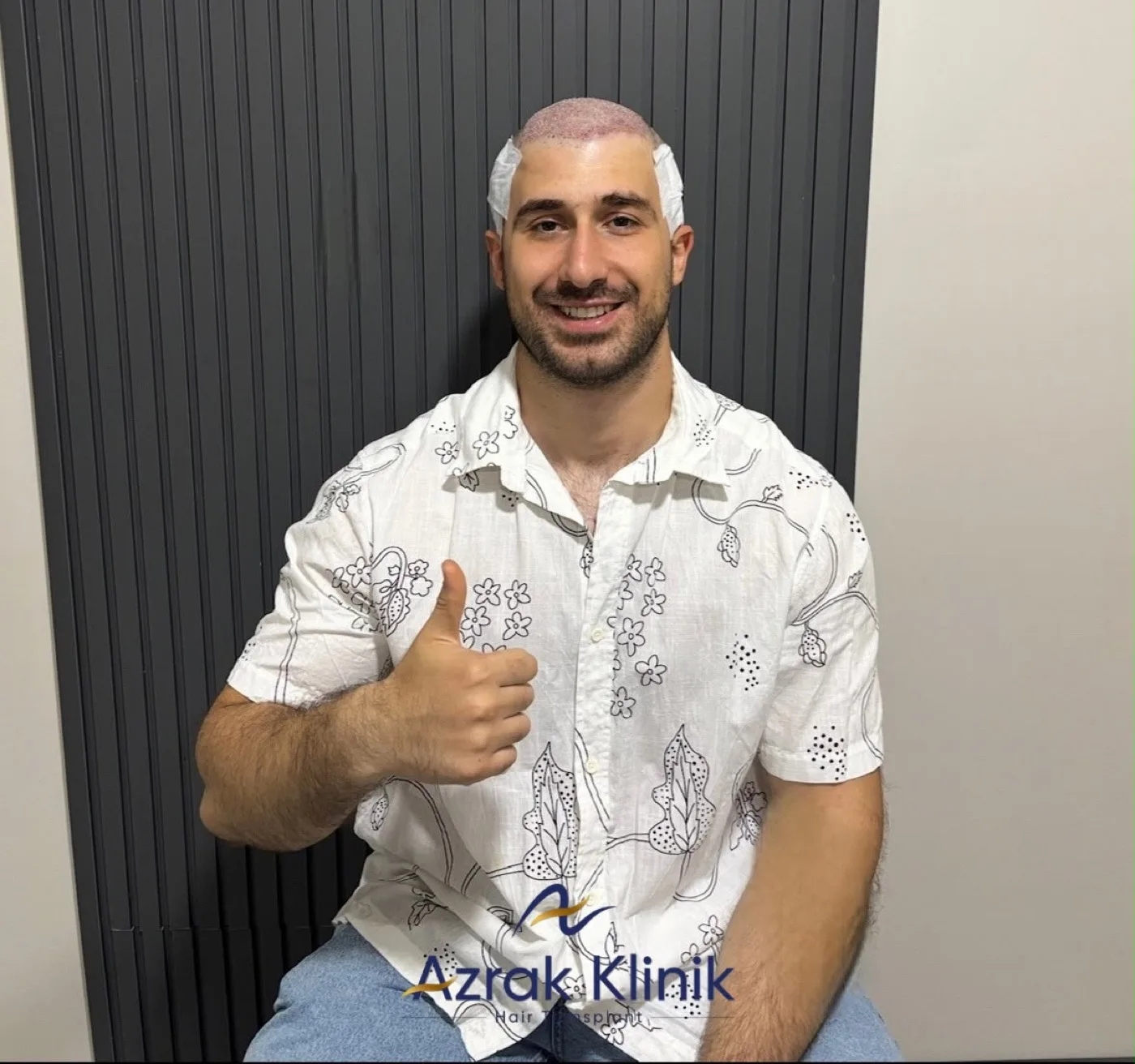
In much of this industry, the surgeon designs the hairline and technicians do the rest. Here the surgeon performs the extraction, channel opening and implantation. It is the single biggest variable in your result.
No parallel operating rooms, no rotating between three patients. The clinical day belongs to one person — the only way an eight-hour operation gets eight hours of attention.
If your donor area cannot supply the coverage you want, or your hair loss has not stabilized, we tell you. Saying no at the consultation costs you less than saying nothing and taking a deposit.
Your consultation is a clinical conversation. No commission-based advisor, no offer that expires at midnight, no discount for booking today.
Sapphire FUE and DHI are both available at the clinic. Which one you get — or which combination — is decided by your donor area and coverage needs, not by what the clinic prefers to sell.
Structured, photo-documented check-ups at months 1, 3, 6 and 12, plus direct access to the clinical team throughout. The operation takes a day; the result takes a year.
Where our patients come from
A hair transplant is worth traveling for — and the trip needs planning. Select where you are coming from and we will tell you what the journey actually involves.
SelectedIstanbulThe city where the clinic is
The city where the clinic is
No overnight stay is needed for the consultation or the surgery. Most patients in Istanbul come in for the assessment on one day and set the surgery date separately.
Applies wherever you come from
Travel times are planning bands, not timetables — they vary by route and airline. Coming from abroad? Read the travel guide.
Free assessment
Answer four questions and a member of the clinical team will get back to you within one business day. No fee, no obligation and nobody on commission on the other end.
Three things decide it: how much you have lost, how dense your donor area is, and whether the loss has stabilized. A donor area that cannot fund the area you want covered is the most common reason we recommend against surgery — and we would rather tell you that at consultation than after you have paid a deposit.
Under 24 is usually too early, because the final pattern has not declared itself. Operate on a hairline at 21 and by 35 the native hair behind it has receded away, leaving a floating island of transplanted hair. Medical therapy first, surgery once the pattern is clear.
The honest answer is that nobody can tell you from a photograph alone. Planning ranges by pattern stage run from roughly 1,500 grafts for early recession to 5,500 or more for advanced loss — but donor density is what actually sets the ceiling, and that requires examination.
The anesthetic injections sting for a few minutes. After that the scalp is numb and the operation is not painful. Most patients spend the day talking, eating, or watching something. Discomfort in the days afterwards is usually described as tightness rather than pain and is managed with simple analgesia.
For a full-session FUE, the donor area is shaved. For DHI and for most female cases, the recipient area can be left unshaved. If shaving is genuinely not an option for you, ask about the unshaven technique — it works, at a lower graft ceiling and a higher cost per graft.
FUE leaves hundreds of dot-shaped marks under a millimeter wide, distributed so that no area is depleted. Once surrounding hair reaches a few millimeters they are not visible. The linear scar people worry about belongs to the older strip technique, which we do not perform.
A full session runs six to nine hours including breaks. You arrive in the morning and leave the same day. There is no overnight stay.