
Surgical Hair Transplant
Afro-Textured Hair Transplant
Afro-textured follicles curl beneath the skin. A standard punch angled for straight hair cuts right through them. This isn't a marketing category — it's a technical specialty.
Curved follicles need a different punch and a slower hand.
- Duration
- 7–9 hours
- Anesthesia
- Local
- Graft range
- 1,500 – 4,000
- Back to work
- 10–14 days
- First growth
- Month 4–5
- Final result
- Month 14–18
What it actually is
The follicle you see at the surface tells you almost nothing about the direction it takes underneath. In Afro-textured hair, the shaft curves sharply beneath the skin. Punch straight down from the visible angle and you cut the root — the graft is lost before it ever leaves the donor area.
Managing this means a wider punch diameter, a slower extraction rhythm, frequent angle correction and constant checking of extracted grafts under magnification for transection. The yield per hour is lower. That's the honest cost of doing it right.
The advantage is real: thick, curly hair gives excellent visual coverage per graft. A well-executed 2,500-graft session in Afro-textured hair can look fuller than 3,500 grafts in fine straight hair. A history of keloids is screened for in advance, because it changes the risk conversation.
Who it suits
- Afro-textured or tightly curled hair with a stable donor area
- Traction alopecia from years of braids, locs or extensions
- Patients who value coverage per graft over the raw graft count
When we say no
- A personal or family history of keloids, until assessed
- Central centrifugal cicatricial alopecia that is still active
- Donor areas already depleted by previous poor sessions
These are general indications, not a diagnosis. Whether this procedure is right for you is decided by an examination, not by a website.
Step by step
What happens,
in order.
- 01
Tissue assessment
Curl pattern, follicle caliber and keloid risk are assessed before anything else.
- 02
Design
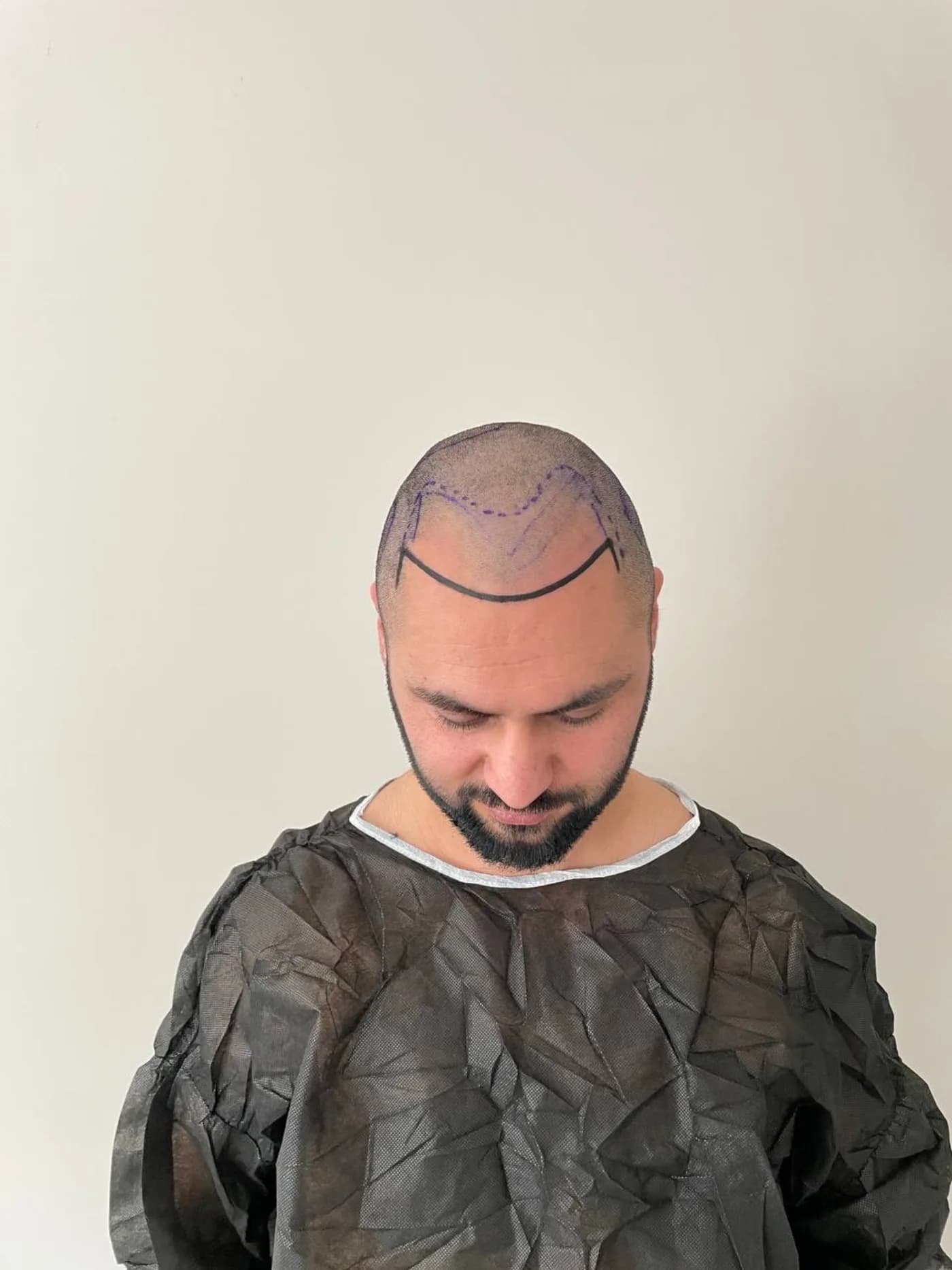
The hairline is shaped to proportions that suit Afro-textured hair, not a copied template.
- 03
Adapted extraction
Wider punch, corrected angle and a slower rhythm to follow the follicle's curve.
- 04
Transection check
Grafts are inspected under magnification; the rate is tracked and reported to you.
- 05
Implantation
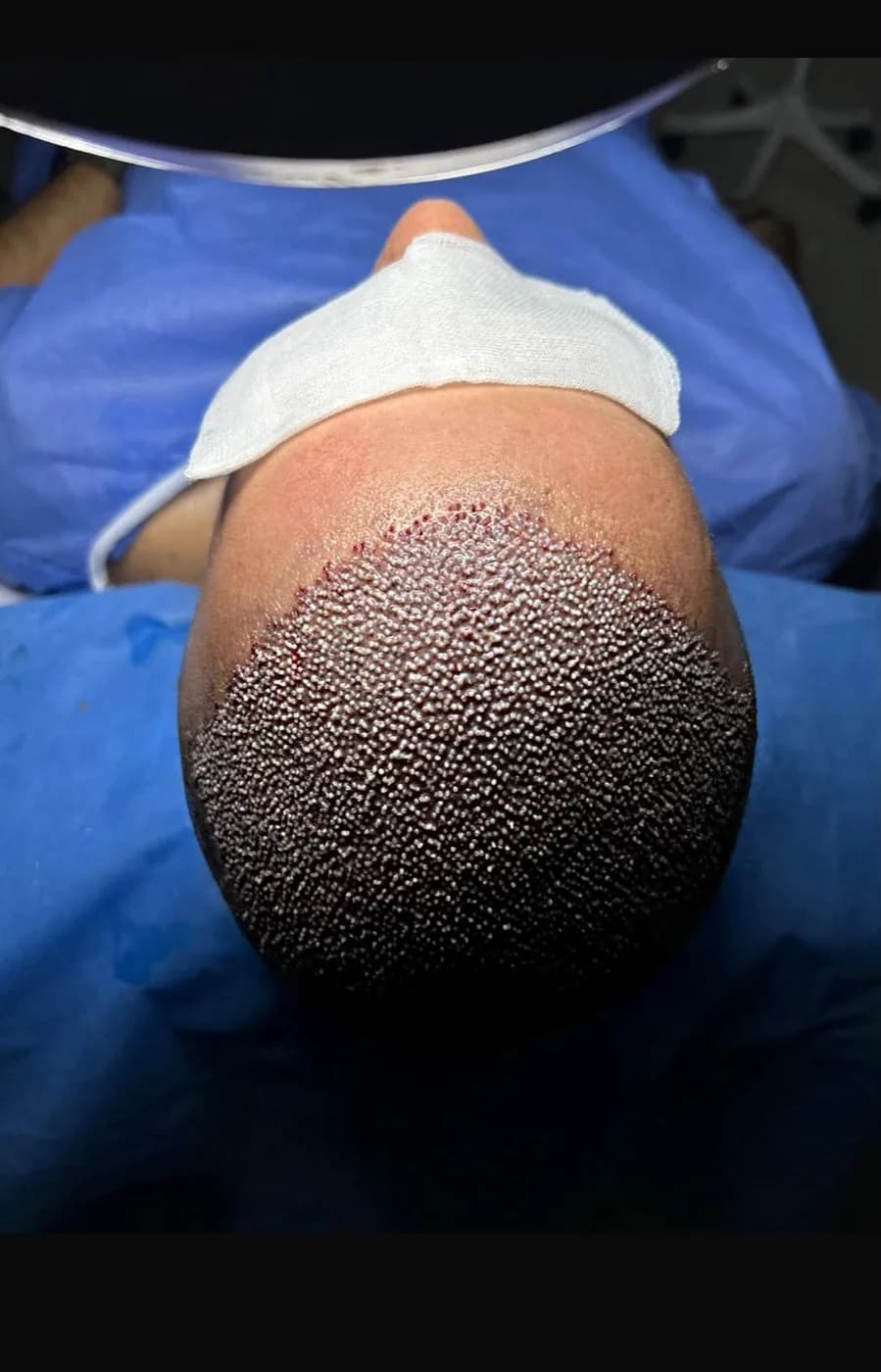
Placed along the natural curl direction so the hair grows the way yours already lies.
- 06
Follow-up
An extended check-up schedule — thick hair often shows its result later.
Why the curl changes the surgery
Afro-textured hair curls beneath the skin just as it does above it. The follicle itself is curved, which means a punch aligned to the visible exit angle can cut straight through the follicle below the surface. In inexperienced hands, transection rates in textured hair are significantly higher than in straight hair, and every transected follicle is wasted donor supply.
Managing this takes a larger punch diameter, slower extraction and often a test extraction at the start of the case to establish the curvature before settling into a rhythm. It's the clearest example in hair transplantation of volume-driven clinics producing worse results than careful ones.
The advantage, and the scarring question
The payoff matters: curly hair covers the scalp far more efficiently than straight hair, so a given graft count produces more visible density. Patients with textured hair often get a fuller-looking result with fewer grafts than a straight-haired patient would need for the same area.
Keloid and hypertrophic scarring risk deserves a direct conversation, not reassurance. A personal or family history of keloids changes the risk assessment for both the donor and recipient areas, and it's one of the specific reasons a case may be declined or approached first with a test session.
Aftercare is different too
Textured hair is usually drier than straight hair, and the routines that keep it healthy — oils, protective styles, infrequent washing — clash directly with post-operative instructions that call for frequent gentle washing and nothing on the scalp except what the clinic provides. That clash needs to be managed by planning, not improvised on day four.
Protective styles stay off for longer than most patients expect. Braids, extensions, locs and anything that puts tension on the hairline are off-limits until the clinic gives the go-ahead, because tension on healing grafts is the very mechanism that caused traction alopecia in the first place. For patients whose hair loss is partly traction-related, the conversation isn't about a few weeks of restriction but about a permanent change in styling.
Not sure where you stand?
A free assessment gives you a measured graft range and a clear answer on whether surgery is the right move this year.
Get a free assessmentQuestions
Straight answers.
Because the transection rate punishes inexperience and the yield per hour is low. Declining is more honest than accepting and delivering a poor result — but it means you should ask the surgeon directly how many such cases they have done.
It isn't an automatic no, but it needs an assessment. A tendency to keloids increases donor-area risk and changes how we close and manage the area. Bring photos of your existing keloids to the consultation.
Yes. A follicle keeps its genetic character wherever it's placed. Transplanted Afro-textured hair grows with the same curl pattern as the donor area it came from.
Is Afro-Textured the right procedure for you?
Send four answers and let the clinical team tell you — even if the answer is no.