
Important
Medical Disclaimer
This page explains what the information on this website is, what it is not, and how the photos and estimates we publish should be read.
Last updated: September 20, 2026
This website is not medical advice
Everything published here is general information about hair transplant procedures. It is not a diagnosis, a treatment recommendation or a substitute for a consultation with a qualified physician who has examined you.
Reading this website, submitting the consultation form or messaging the clinic before you have been examined and have signed a consent form does not create a doctor-patient relationship.
A hair transplant is a surgical procedure
Follicular unit extraction is a surgical procedure performed under local anesthesia. Like all surgery it carries risks, which include but are not limited to bleeding, infection, swelling, prolonged numbness, folliculitis, poor graft survival, visible donor depletion, scarring and a cosmetic result that does not meet your expectations.
These risks, and those specific to your case, are explained in full at consultation and before consent is given. If you have not had that conversation, you have not been properly informed.
How to read before-and-after photos
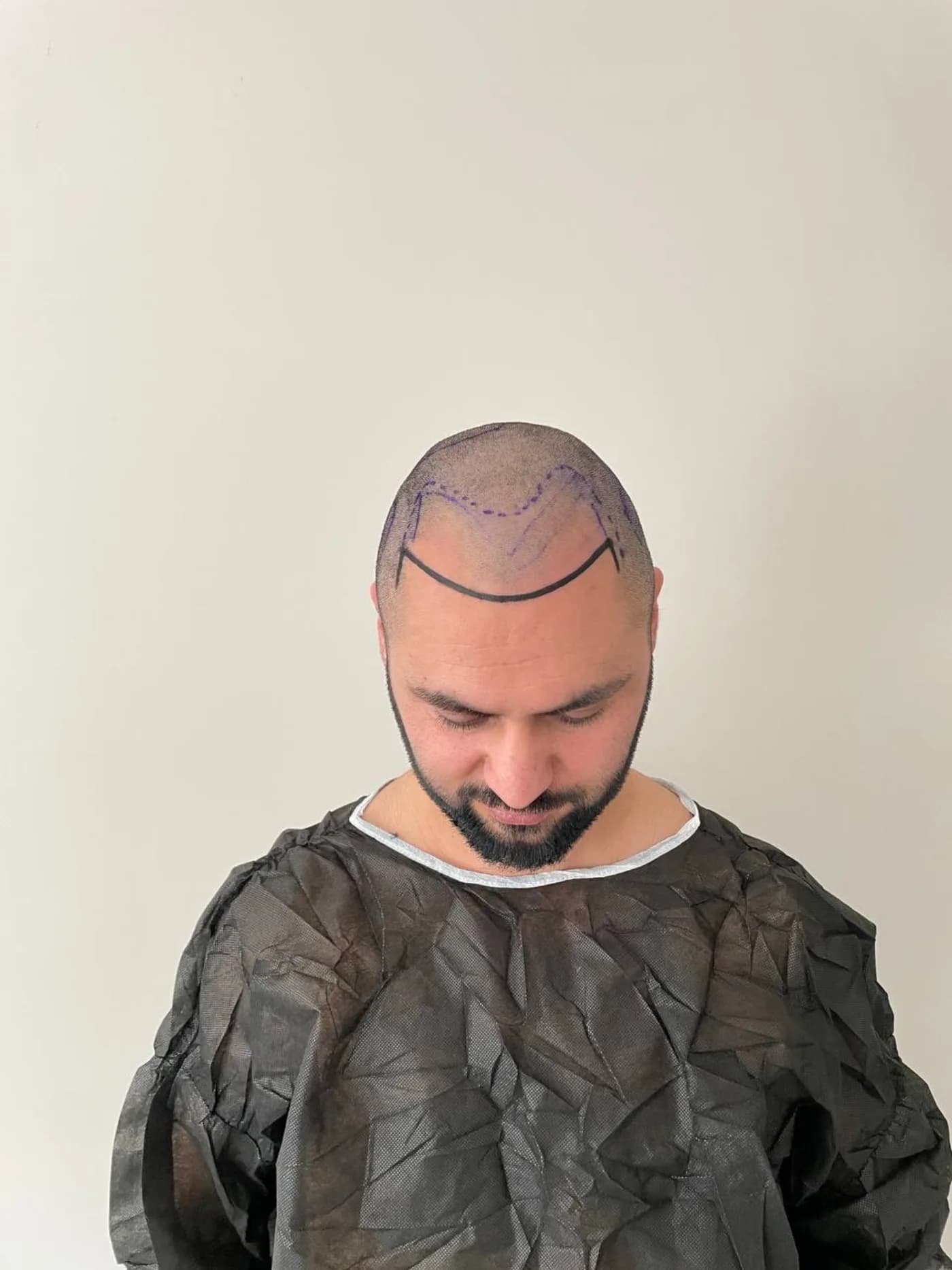
The photos published on this website show results achieved in specific individual patients. They are shown with the patient's permission and have not been retouched to alter density, hairline position or coverage.
They are not a prediction of your result, and they are not a typical result. In hair transplantation, results vary with donor density, hair caliber, scalp laxity, the color contrast between hair and skin, healing response, adherence to aftercare instructions and the extent of hair loss at the time of surgery. Two patients who receive the same number of grafts can end up with visibly different coverage.
Graft estimates on this website are not quotes
The consultation tool on this site gives a planning range based on a pattern stage you select yourself. It is an orientation aid, not an assessment. It cannot see your donor area, and it is your donor density that actually determines how many grafts are available to you.
The number that matters is the one produced after a clinical examination, and it may be significantly higher or lower than the range shown here.
There are no guaranteed results
We do not guarantee a specific graft survival rate, a specific density or a specific cosmetic outcome, and we would treat any clinic that does with caution. If a follow-up program or revision policy applies to your case, its terms are given to you in writing before surgery.
Risks are explained before consent, not on a web page
Every surgical procedure carries risk. In hair transplantation these include, among others, infection, bleeding, prolonged swelling, temporary or rarely permanent numbness, folliculitis, ingrown hairs, weak or patchy growth, shock loss of surrounding native hair, visible donor depletion and — in susceptible people — hypertrophic or keloid scarring. A reaction to local anesthetic is rare but possible.
This list is not exhaustive and does not replace the informed consent process. The risks specific to you, their likelihood in your case and what would be done about each are discussed with you in person before you consent to anything, and those documents are given to you in writing.
General information versus your case
The guides, timelines, graft ranges and comparisons published on this site describe how hair transplantation works in general. They are written to make a consultation more useful, not to replace one. Applying a general range to your own head without an examination is exactly the mistake this site warns against again and again.
Nothing published here should be used to start, stop or change any medication. Finasteride, minoxidil and every other treatment discussed on this site have side-effect profiles that need to be weighed against your own medical history by a physician who knows it.
Medications, interactions and other conditions
Tell the clinic about every medication and supplement you take, including over-the-counter ones. Anticoagulants, some supplements and certain anti-inflammatories affect bleeding during surgery; other medications interact with local anesthesia or with the medications given afterward.
Uncontrolled diabetes, thyroid disease, bleeding disorders, immunosuppression, active skin disease and smoking affect candidacy or the result. Concealing any of these does not make surgery safer; it only makes it less predictable.
External links and third-party content
Where this site refers to medications, devices, products or organizations, the reference is descriptive, not an endorsement, and implies no commercial relationship. Where it links to an external site, we are not responsible for that site's content or for how it may change after we link to it.
Clinical guidance changes. The content on this site is reviewed regularly, and the practice described here reflects our understanding at the time of writing, not a permanent standard.
Emergencies
Do not use this website, the consultation form or messaging channels to report a medical emergency. If you experience heavy bleeding, spreading infection, a high fever or severe pain, call the clinic on the number in your discharge documents or go to an emergency department immediately.