
Facial Hair Transplant
Beard and Mustache Transplant
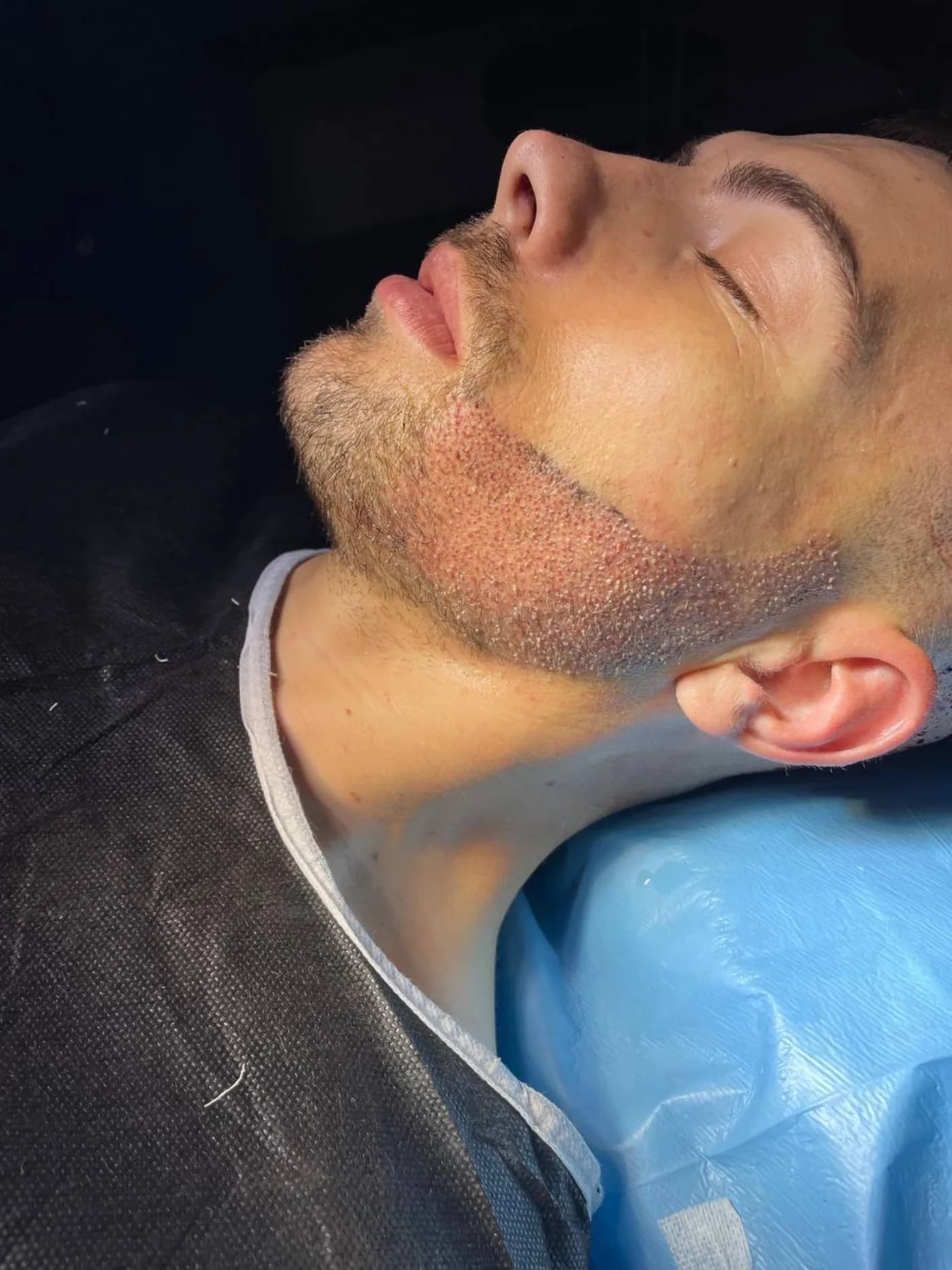
Scalp follicles are moved to the cheeks, chin or mustache. Facial hair exits the skin at a much flatter angle than scalp hair — get that wrong and it grows outward like a bristle brush.
Sparse patches filled at the angle a beard actually grows.
- Duration
- 4–6 hours
- Anesthesia
- Local
- Graft range
- 800 – 2,500
- Back to work
- 7–10 days
- First growth
- Month 3–4
- Final result
- Month 10–12
What it actually is
A beard transplant is an angle problem before it's a density problem. Scalp hair exits the skin at about 45 degrees; beard hair closer to 15–20 degrees. Implant scalp follicles at a scalp angle and the result sticks out from the face — the most common sign of a bad beard transplant.
The second variable is single-hair discipline. Natural beards are overwhelmingly single-hair follicles along the cheek line. Placing two- and three-hair units there creates visible tufts. Grafts are sorted by hair count, and multi-hair units go where the beard is naturally denser.
Donor hair usually comes from the back of the scalp; if your existing beard is coarse, hair from under the chin may be a better match. Transplanted beard hair keeps growing at the rate of scalp hair, which means regular trimming — that's normal, not a complication.
Who it suits
- Sparse or asymmetric growth along the cheeks and jawline
- A mustache that doesn't connect to the beard
- Scars from acne, injury or surgery that interrupt growth
- Creating facial hair as part of gender affirmation
When we say no
- Active, untreated folliculitis or cystic acne in the beard area
- Under 22 — natural beard development is still finishing
- A donor area already reserved for future scalp coverage
These are general indications, not a diagnosis. Whether this procedure is right for you is decided by an examination, not by a website.
Step by step
What happens,
in order.
- 01
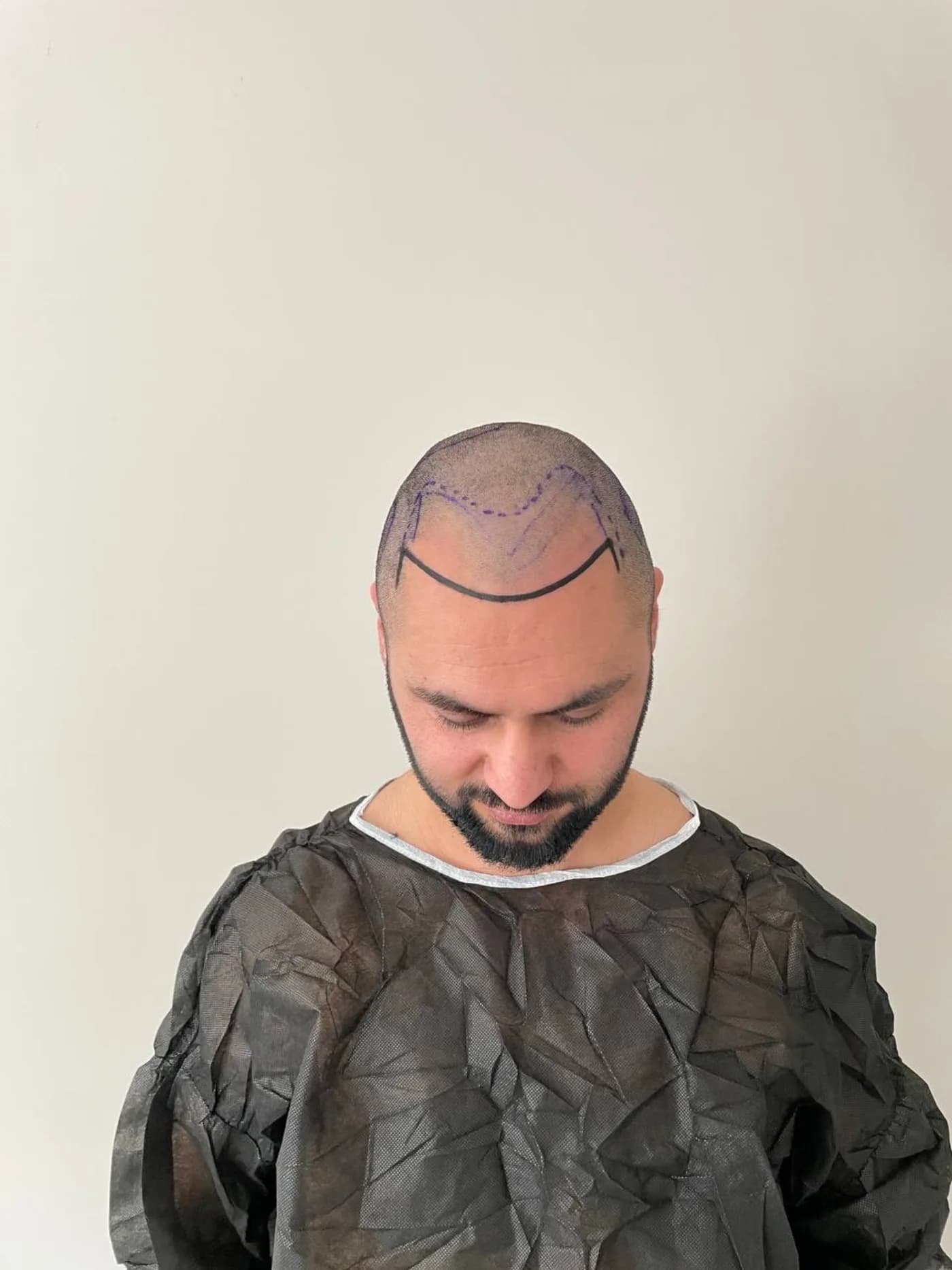
Beard mapping
The cheek line, jawline and mustache border are drawn on your face and approved in the mirror.
- 02
Donor selection
Scalp or under-chin hair is chosen to match the caliber of your existing beard.
- 03
Extraction
Predominantly single-hair follicular units are removed and sorted by hair count.
- 04
Low-angle implantation
Placed at 15–20°, following the natural growth direction of your face.
- 05
Recovery
Facial swelling for two to three days, small crusts that clear within a week.
- 06
Follow-up
Check-ups at months 3, 6 and 12; trimming guidance from the first month.
A beard is not a scalp
Facial skin is softer, more mobile and more richly vascularized than the scalp; it responds to a transplant with more swelling and faster healing. Beard hair also grows at a much flatter angle than scalp hair — almost lying on the skin — so channels are made nearly parallel to the surface. A graft placed on the chin at a scalp angle sticks out from the face and is noticed instantly.
Almost all beard work uses single grafts. Multi-hair units create tufts that read as artificial in an area people look at directly in conversation; that's why a three-thousand-graft beard case can take as long as a four-thousand-graft scalp case.
Design and the donor consequence
Direction changes continuously across the face: downward on the cheeks, angled toward the midline under the chin, sideways along the jawline, and different again at the mustache and under the nose. Getting these transitions right is what separates a beard that looks grown from one that looks installed.
The grafts come from the scalp donor area, which means a beard transplant spends the same limited budget as a hair transplant. Someone with both a receding hairline and a sparse beard faces a real trade-off, and the order of those two plans is a conversation worth having before either is planned.
Not sure where you stand?
A free assessment gives you a measured graft range and a clear answer on whether surgery is the right move this year.
Get a free assessmentQuestions
Straight answers.
If the angle and single-hair discipline are right, yes. If not, it looks transplanted and is very hard to correct. Ask to see the surgeon's own beard cases photographed in side lighting — that's where the angle shows.
Yes. It keeps the growth rate of its scalp origin, which is faster than natural beard hair. You'll trim it more often than the rest of your face.
Not for the first three weeks. After the first month, yes — razor, clippers, whatever you prefer.
Is Beard Transplant the right procedure for you?
Send four answers and let the clinical team tell you — even if the answer is no.