
Surgical Hair Transplant
Sapphire FUE Hair Transplant
Follicular units are extracted one by one and placed into channels opened with a sapphire-tipped blade. Because the crystal edge is smoother and narrower than steel, channels can be made closer together and the scalp closes faster.
Finer channels, denser placement, faster healing.
- Duration
- 6–8 hours
- Anesthesia
- Local, optional sedation
- Graft range
- 2,000 – 5,500
- Back to work
- 10–14 days
- First growth
- Month 3–4
- Final result
- Month 12–18
What it actually is
Sapphire FUE is not a different operation from FUE — it's a different blade. The channels in the recipient area are opened with a synthetic sapphire tip instead of steel. Because sapphire holds a sharper, narrower edge, each channel sits closer to the true diameter of the graft that goes into it.
That matters for two reasons. Narrower channels mean grafts can be placed at higher density without tearing the tissue in between — which is what makes a hairline look full rather than sparse. Smaller wounds mean less crusting and a scalp that settles in days, not weeks.
At Azrak Hair, the surgeon opens every channel personally. The angle, depth and direction of each channel — the three variables that decide whether a transplant looks like natural hair or a doll's head — are never left to a technician.
Who it suits
- Noticeable temple recession or a receding hairline
- A still-dense donor area at the back and sides
- Norwood stages 2 to 5
- An expectation of coverage, not teenage density
When we say no
- Active, untreated scalp disease such as lichen planopilaris
- Hair loss still progressing quickly and not controlled with medication
- A donor area too weak to cover the desired area
- Under 24 — the final pattern of hair loss isn't clear yet
These are general indications, not a diagnosis. Whether this procedure is right for you is decided by an examination, not by a website.
Step by step
What happens,
in order.
- 01
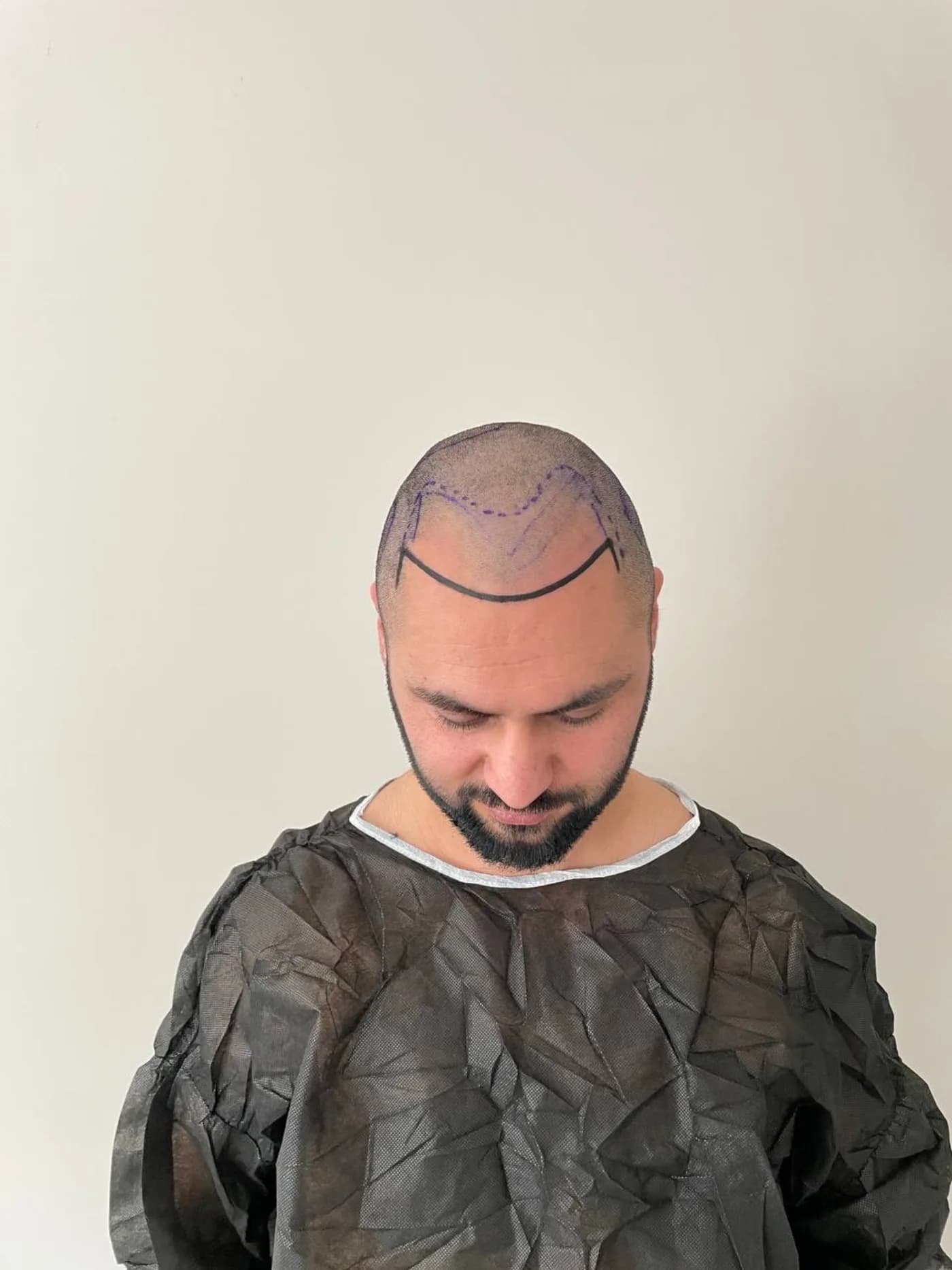
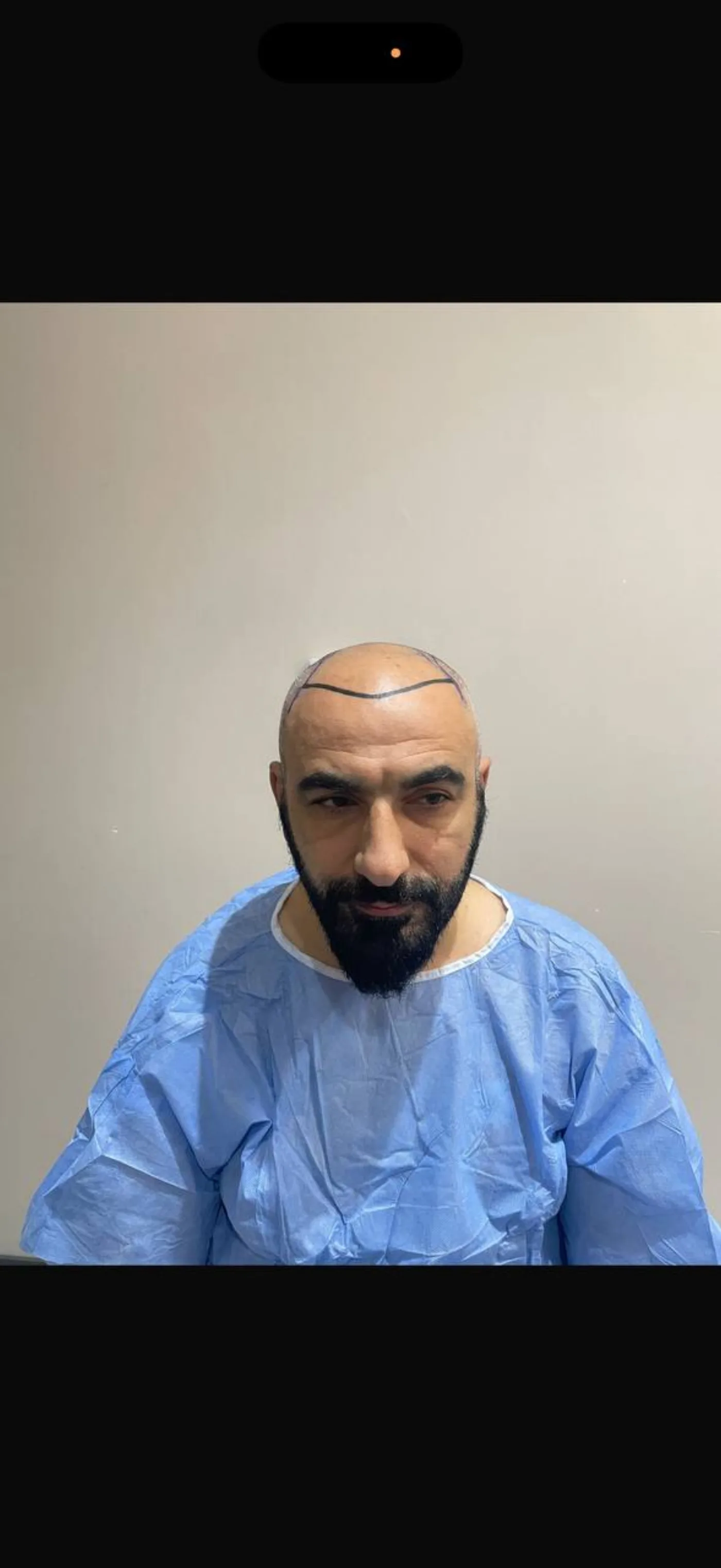
Hairline design
Drawn on you while standing, in natural light. Nothing starts until you approve the line in the mirror.
- 02
Local anesthesia
The scalp is numbed gradually. You're awake, comfortable and able to talk all day.
- 03
Extraction
Follicular units are removed one by one from the donor area with a micromotor punch.
- 04
Channel opening
Sapphire blades open the recipient channels at the exit angle of your existing hair.
- 05
Implantation
Grafts are placed according to a density map — singles at the hairline, multi-hair units behind it.
- 06
First wash
Done at the clinic the day after surgery, along with your aftercare kit and written schedule.
What decides the result — and it isn't the blade
Sapphire tips are a real refinement: the crystal edge holds a narrower, smoother profile than steel, so each channel sits closer to the true diameter of the graft that goes into it, and smaller wounds mean less crusting and a scalp that settles in days, not weeks. But a blade can't choose an angle. Every channel has three properties — its exit angle from the skin, its direction relative to its neighbors and its depth — and those three decide whether a result looks like hair or like a doll's head.
At the hairline the angle is shallow, almost skimming the scalp, and it changes continuously along the curve of the forehead. Behind it the angle steepens. At the crown it spirals. None of this is set by an instrument; it's set by the person holding it, thousands of times in a day, while tired.
Density and the limit that isn't negotiable
Patients want maximum density, surgeons plan for maximum survival — and those aren't the same goal. A natural scalp has roughly 80–100 follicular units per square centimeter. Transplanted areas are typically planned at 35–50, because every graft is a tissue transplant that has to be fed by the recipient bed's blood supply until it revascularizes.
Pack too densely and the area competes for nourishment: survival drops, and the patient who paid for 4,000 grafts gets the visual result of 2,800. A well-fed 40 where every graft survives looks denser at conversational distance than a crowded 65 where a third fail — which is what shows that a surgeon who refuses to pack more tightly isn't avoiding work, but protecting the result.
Not sure where you stand?
A free assessment gives you a measured graft range and a clear answer on whether surgery is the right move this year.
Get a free assessmentQuestions
Straight answers.
It changes the recipient wound, not the graft. Narrower channels allow denser placement and reduce crusting. It's a real refinement, not a different procedure — any clinic claiming it doubles graft survival is exaggerating.
For a full session, the donor area is shaved. If shaving is a problem for you, ask about the unshaven approach — it's possible for smaller sessions at a higher cost per graft.
The uncomfortable part is the anesthetic injections, which last a few minutes. The surgery itself isn't painful. Most patients spend the day listening to music or watching something.
Is Sapphire FUE the right procedure for you?
Send four answers and let the clinical team tell you — even if the answer is no.