

Planning
Finasteride, minoxidil and surgery: how they fit together
Surgery restores an area. Medication defends the rest. Patients who treat them as alternatives usually end up needing a second operation they could have avoided.
7 min readReviewed by the Azrak Hair clinical teamUpdated 2026
Two different jobs
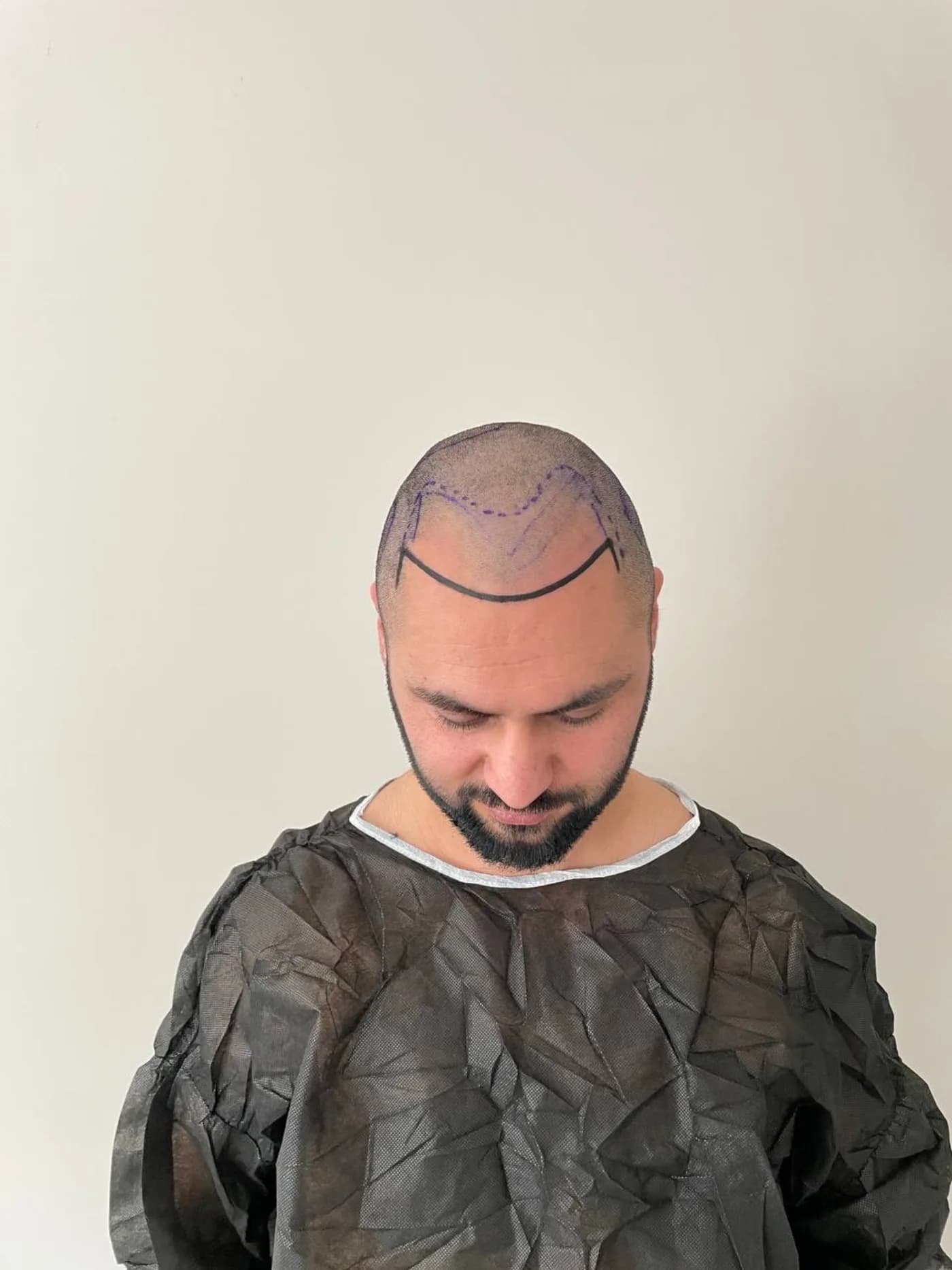
A transplant relocates DHT-resistant follicles into a bald or thinning zone. It does nothing whatsoever to the native, miniaturizing hair around and behind that zone. If that native hair continues to fail, the transplanted zone stays and everything around it recedes, which over five to ten years produces exactly the artificial-looking island that patients are trying to avoid.
Medical therapy attacks the process itself. It cannot resurrect a follicle that has already been lost, which is why it is not an alternative to surgery for an established bald area — but it is the only thing that protects the hair a transplant is not treating.
What the evidence supports
Two treatments carry substantial evidence for androgenetic alopecia in men, and the picture for women is different and more individual.
- Finasteride, an oral 5-alpha-reductase inhibitor, reduces scalp DHT and in trials slows or halts progression in the large majority of men, with a minority showing measurable regrowth. It is not approved for use in women of childbearing potential.
- Minoxidil, topical or oral, extends the anagen growth phase and improves caliber. It works on hair that is still present and miniaturizing, not on smooth scalp.
- Both stop working when you stop them. Gains accumulated over years can be lost within months of discontinuation — a fact that belongs in the decision before starting, not after.
- Adjuncts such as PRP and mesotherapy are used to support miniaturizing follicles. Evidence is more variable than for the two above, and they are best framed as supportive rather than foundational.
- Ketoconazole shampoo, microneedling and low-level laser therapy have some supporting literature as adjuncts; supplements, 'DHT-blocking' shampoos and scalp massage regimes do not reverse androgenetic loss.
Side effects, discussed properly
Finasteride's reported sexual side effects — reduced libido, erectile difficulty, ejaculatory changes — occur in a small percentage of users in trials, are usually reversible on discontinuation, and are the subject of ongoing debate regarding persistent symptoms in a rare subset. Mood effects have also been reported. None of this is a reason to hide the drug or to hand it out casually; it is a reason for the conversation to happen with a physician who knows your history.
Minoxidil's common issues are local irritation, unwanted facial hair from spread or from oral use, and an initial shedding phase in the first weeks that alarms people who were not warned. Oral minoxidil is used off-label at low dose and requires cardiovascular consideration.
A clinic that will not discuss side effects in detail, or that dismisses them, is not the clinic to be prescribing them.
Timing around the operation
Common practice is to establish medical therapy before surgery rather than after, so that native hair is stabilized and any initial shedding has already happened. Patients already on treatment are usually advised to continue through the perioperative period; stopping abruptly around surgery introduces a shedding phase at exactly the moment it will be misread as graft failure.
Anticoagulants, high-dose vitamin E, some supplements and anti-inflammatories affect bleeding and are typically paused before surgery under instruction. Alcohol and smoking are restricted around the procedure for perfusion reasons. All of this is clinic-specific and belongs in written pre-operative instructions rather than in a forum post.
Where women differ
Female pattern loss has a longer list of treatable causes — thyroid disease, iron deficiency, postpartum telogen effluvium, polycystic ovary syndrome, medications, traction from styling. That is why the workup comes first. Operating on a diffuse loss driven by an untreated systemic cause wastes grafts and does not stop the shedding.
Where a woman is a surgical candidate, the medical plan is built around her diagnosis rather than copied from the male protocol, and finasteride is not a default option.
The honest summary
If your loss is advancing and you are unwilling to consider medical therapy, that is a legitimate personal decision — but it should change the surgical plan. It usually means a more conservative hairline, a smaller covered area, and an explicit acceptance that further loss behind the transplanted zone will likely require another session later.
A surgeon who does not raise this is planning for the photograph at month twelve rather than for your head at fifty.
Frequently asked questions
- Do I have to take finasteride to have surgery here?
- It is not a requirement. It is a discussion, because declining it changes what the surgical plan should be.
- Will medication regrow my hairline?
- Rarely and modestly. Medication is far better at keeping hair than at bringing it back, which is why it pairs with surgery instead of replacing it.
- Can I stop after the transplant has grown?
- The transplanted hair will stay regardless. The native hair it sits among will resume its previous course, which is usually not the outcome patients want.
This article is general information about hair transplantation, not medical advice about your case. Whether any procedure or medication is right for you can only be decided after an examination. Read the full medical disclaimer.
Find out what is really possible with your donor area.
A free assessment, an honest graft count and a clear answer on whether surgery is the right move right now.