
Planning
The donor area: the budget you only get to spend once
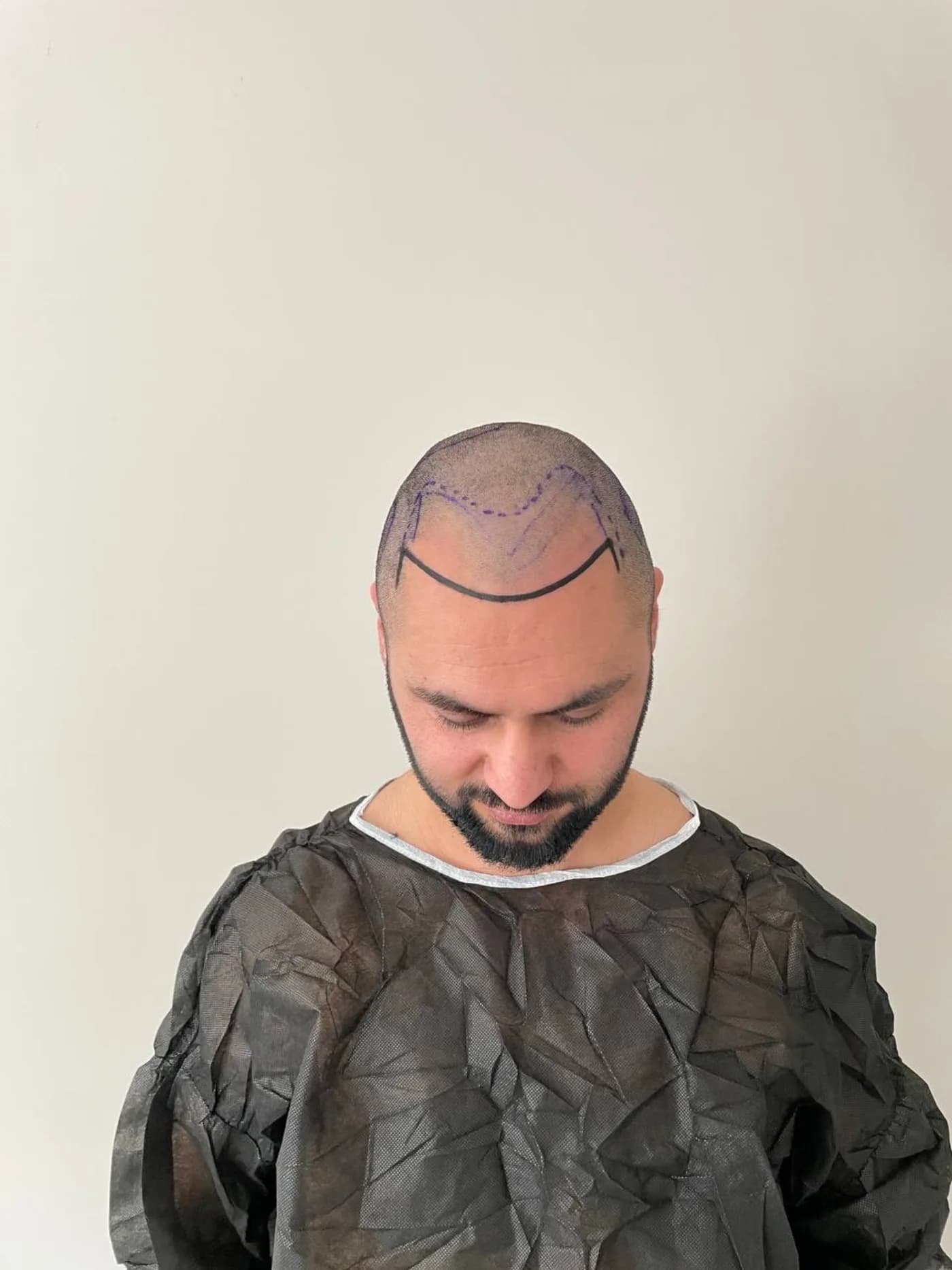
Everything a hair transplant can ever achieve is limited by one strip of scalp at the back of your head. It is not renewable, it is smaller than most patients assume, and it is the first thing a good surgeon measures.
7 min readReviewed by the Azrak Hair clinical teamUpdated 2026
Why the back of the head is different
Androgenetic alopecia is not a disease of the scalp, it is a property of individual follicles. Follicles on the top of the head carry receptors that respond to dihydrotestosterone by miniaturizing over successive cycles. Follicles in a horseshoe-shaped band at the back and sides largely do not. Move one of those follicles to the top and it keeps its own genetic character: this is donor dominance, described in the 1950s, and it is the entire principle on which transplantation rests.
It also explains the limits. Nothing creates new follicles. A transplant is a redistribution of a fixed asset, and the only question is how well and how sparingly that asset is spent.
How much is actually available
The safe donor zone is typically a band roughly 6 to 8 cm tall at the occiput, tapering above the ears. Average scalps hold something on the order of 6,000 to 8,000 follicular units in that zone, and standard practice is to harvest only a fraction of it in any one session so that the remaining hair still covers the extraction sites.
Across a lifetime, most patients can safely give up somewhere between 4,000 and 7,000 grafts in total, across all sessions. High-density donors sit above that range and thin donors well below. Two numbers set the ceiling: density in follicular units per square centimeter, measured with a densitometer, and the total area of the safe zone.
| Donor density | Reading | Practical meaning |
|---|---|---|
| Below 60 FU/cm² | Low | Conservative plans only; some cases declined |
| 60 – 75 FU/cm² | Below average | Smaller area, higher hairline |
| 75 – 90 FU/cm² | Average | Typical multi-session capacity |
| Above 90 FU/cm² | High | Larger sessions possible if other factors allow |
How a donor area gets destroyed
Over-harvesting is the most common serious complication in modern hair restoration, and it is almost always the result of a commercial decision rather than a surgical one. It looks like this: a clinic sells a fixed 5,000 graft package to a patient whose donor cannot support it, extracts uniformly across the whole back of the head, and leaves a moth-eaten, see-through donor that becomes obvious the first time the patient asks for a short haircut.
It is effectively irreversible. Extracted follicles do not regrow, and there is no procedure that restores donor density — beard or body hair can sometimes camouflage, and scalp micropigmentation can create the illusion of density, but the underlying loss is permanent.
- Punch size matters — larger punches take more surrounding tissue and leave more visible dots.
- Extraction should be distributed, never concentrated in one patch, and never taken from above the safe zone where future recession may reach.
- Transection rate — the percentage of follicles damaged during extraction — is a real quality metric. Fatigue at hour ten raises it.
- Body and beard hair can supplement scalp donor in selected cases, but beard hair has different caliber and cycle behavior and belongs mostly outside the frontal hairline.
FUE dots versus the FUT line
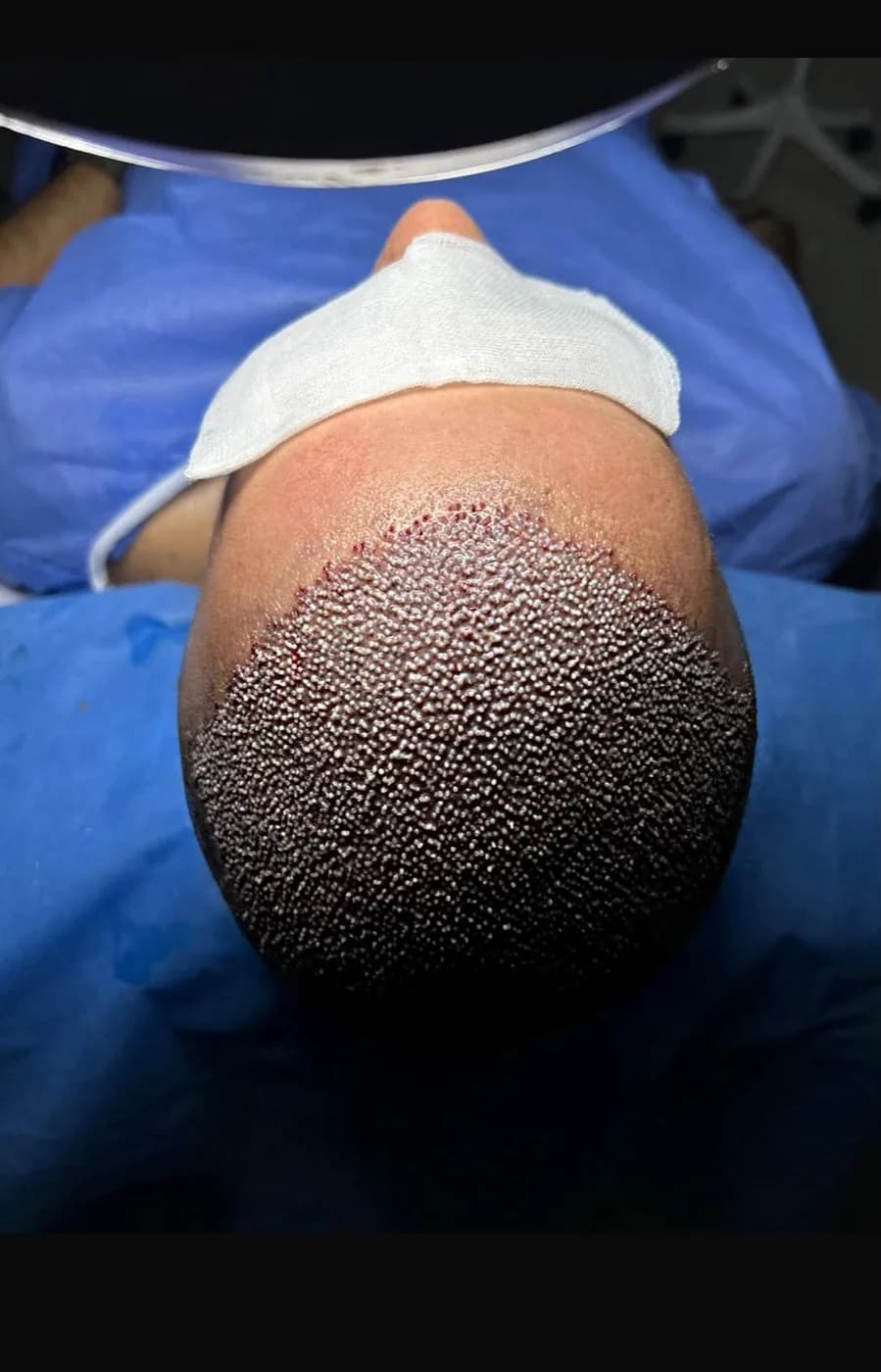
Follicular unit extraction leaves hundreds to thousands of round punctate scars, each under a millimetre, spread across the donor. They are invisible under hair of a few millimetres, and visible at a genuine buzz cut, particularly in high-contrast hair and skin combinations.
Strip harvesting (FUT) leaves a single linear scar that stays covered by hair of moderate length and is unacceptable to anyone who wants a shaved back and sides. In exchange, FUT preserves donor density elsewhere and can yield large numbers of grafts efficiently. Neither method is universally better; the honest comparison is about what your future haircut needs to look like.
Protecting the budget
The three ways a patient protects their own donor area are unglamorous. Stabilize native hair medically before spending grafts, so that the transplant is not chasing a receding front. Accept a mature hairline rather than a teenage one, because a centimeter of height saves hundreds of grafts. And stage large plans, so that the second session can be adjusted to what actually happened rather than to what was predicted.
A surgeon who tells you what your donor cannot fund is giving you the most valuable information in the consultation. It is also, commercially, the least profitable thing they can say.
Frequently asked questions
- Does donor hair fall out after transplanting?
- It sheds in the weeks after surgery and regrows from month three onward. What it does not do is start behaving like the hair it replaced — it keeps its resistance to DHT.
- Can donor hair grow back where it was taken from?
- No. An extracted follicular unit is gone from the donor permanently. This is why extraction is distributed and limited.
- Can body hair replace scalp donor?
- Sometimes, as a supplement in repair or advanced cases. Body hair has shorter growth cycles and different texture, so it is used selectively rather than as a substitute.
This article is general information about hair transplantation, not medical advice about your case. Whether any procedure or medication is right for you can only be decided after an examination. Read the full medical disclaimer.
Find out what is really possible with your donor area.
A free assessment, an honest graft count and a clear answer on whether surgery is the right move right now.